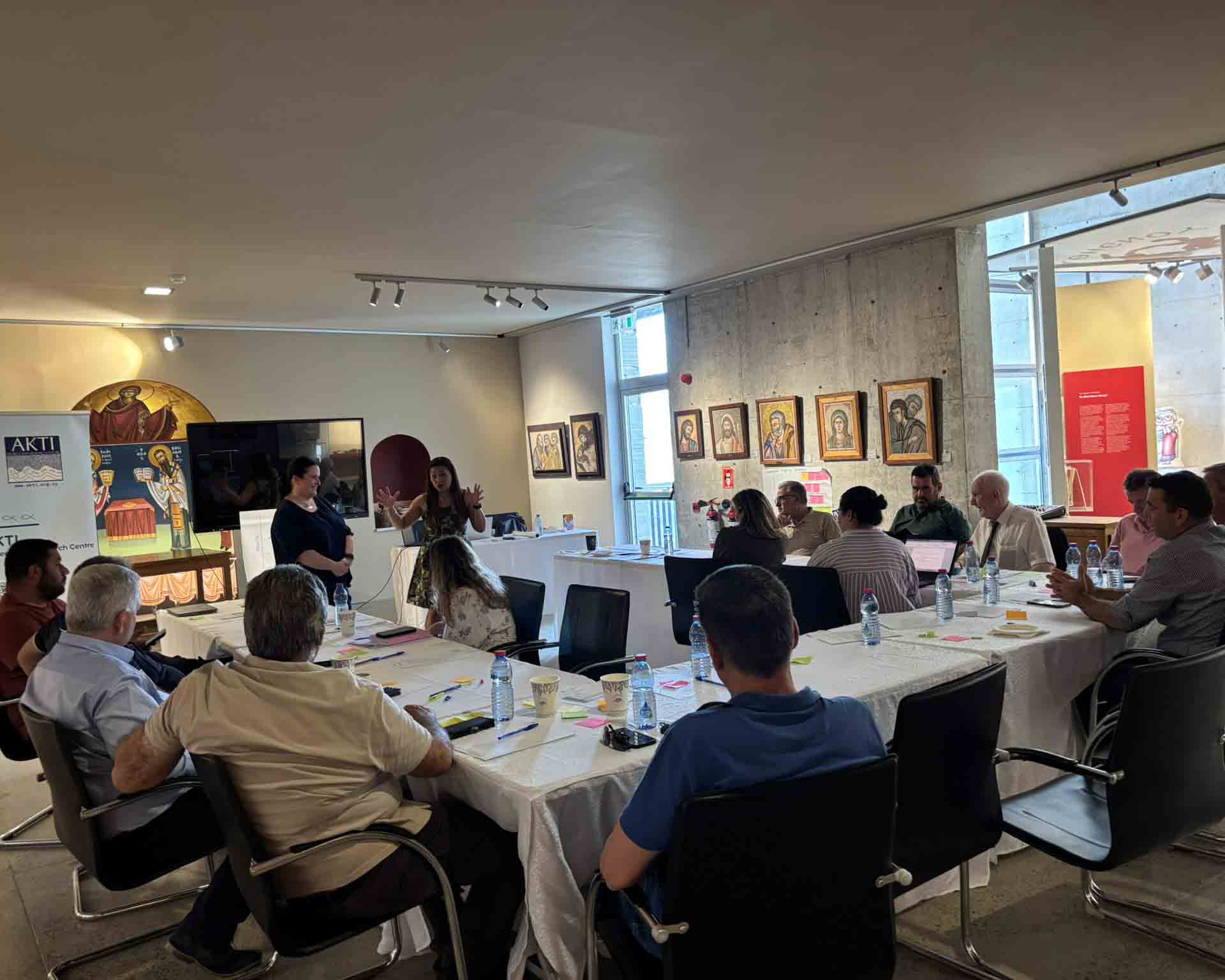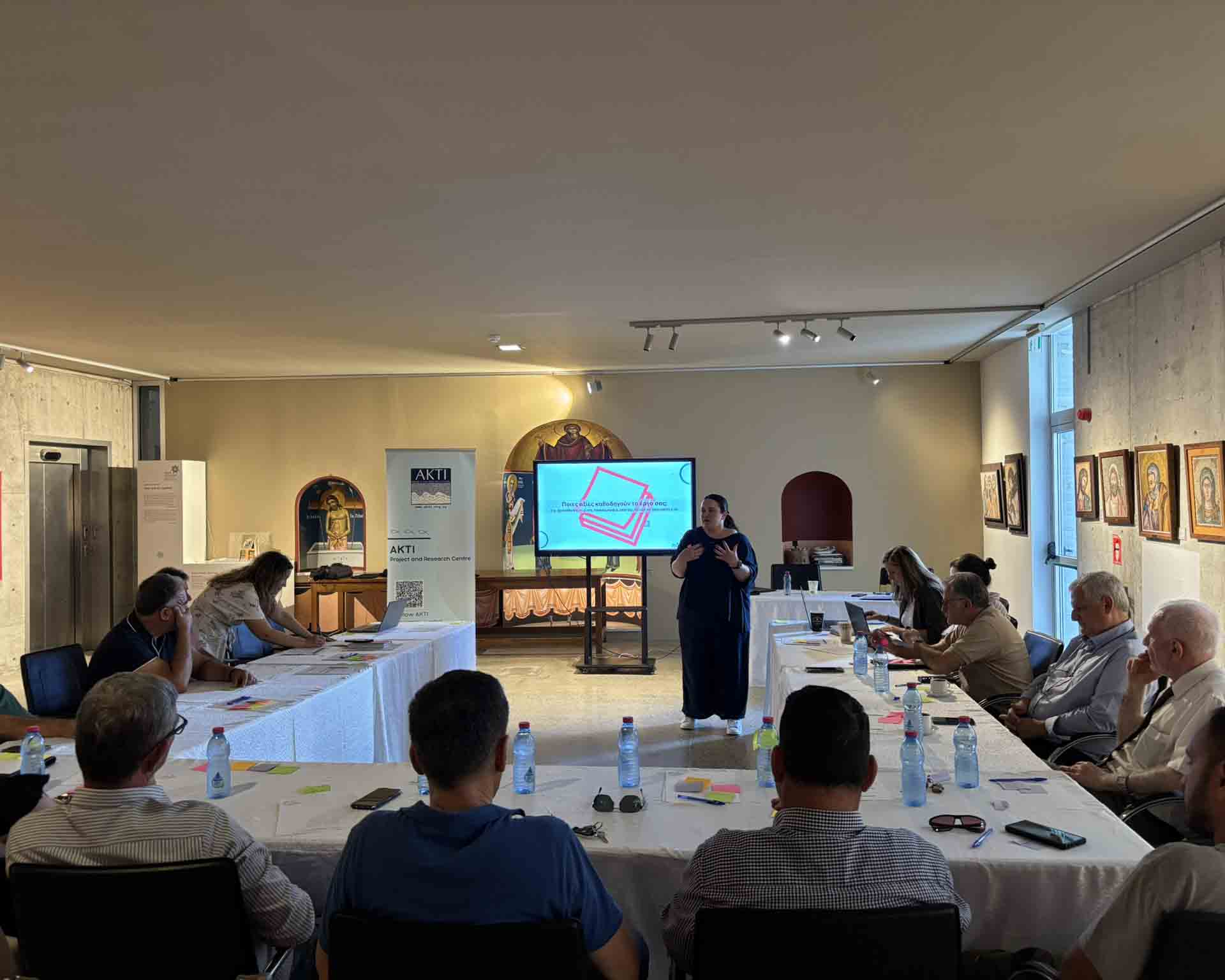
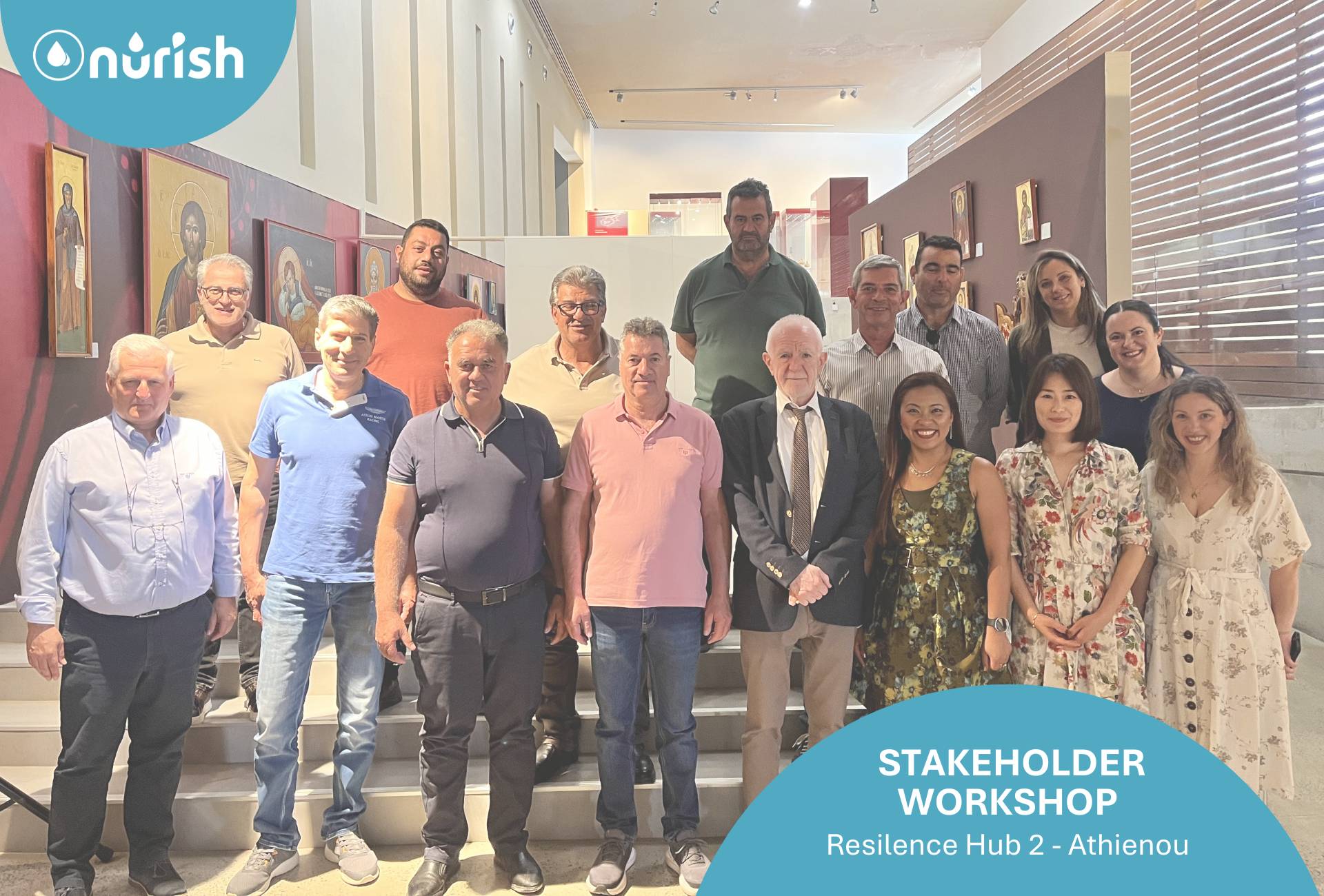
The NURISH Stakeholder Workshop in Athienou, Cyprus, brought together representatives from the municipality, farming and livestock communities, research organisations, and the project team to explore opportunities, challenges, and collaborative approaches for implementing Nature-based Solutions (NbS) through a local composting system.
Held at Athienou Town Hall on 25 May 2026, the workshop focused on the practical potential of developing a local composting system capable of making productive use of manure, olive prunings, green waste, and other organic materials. Participants expressed strong interest in the initiative, recognising its potential to address persistent local challenges related to manure storage and application, bulky pruning residues, transport costs, and limited disposal options.
The session began with an introduction to the NURISH project, presenting its objectives, partnership, and Athienou’s role as one of the project’s Resilience Hubs. Discussions then focused on how a locally adapted composting system could contribute to improving organic waste management while supporting climate resilience and more circular resource use.
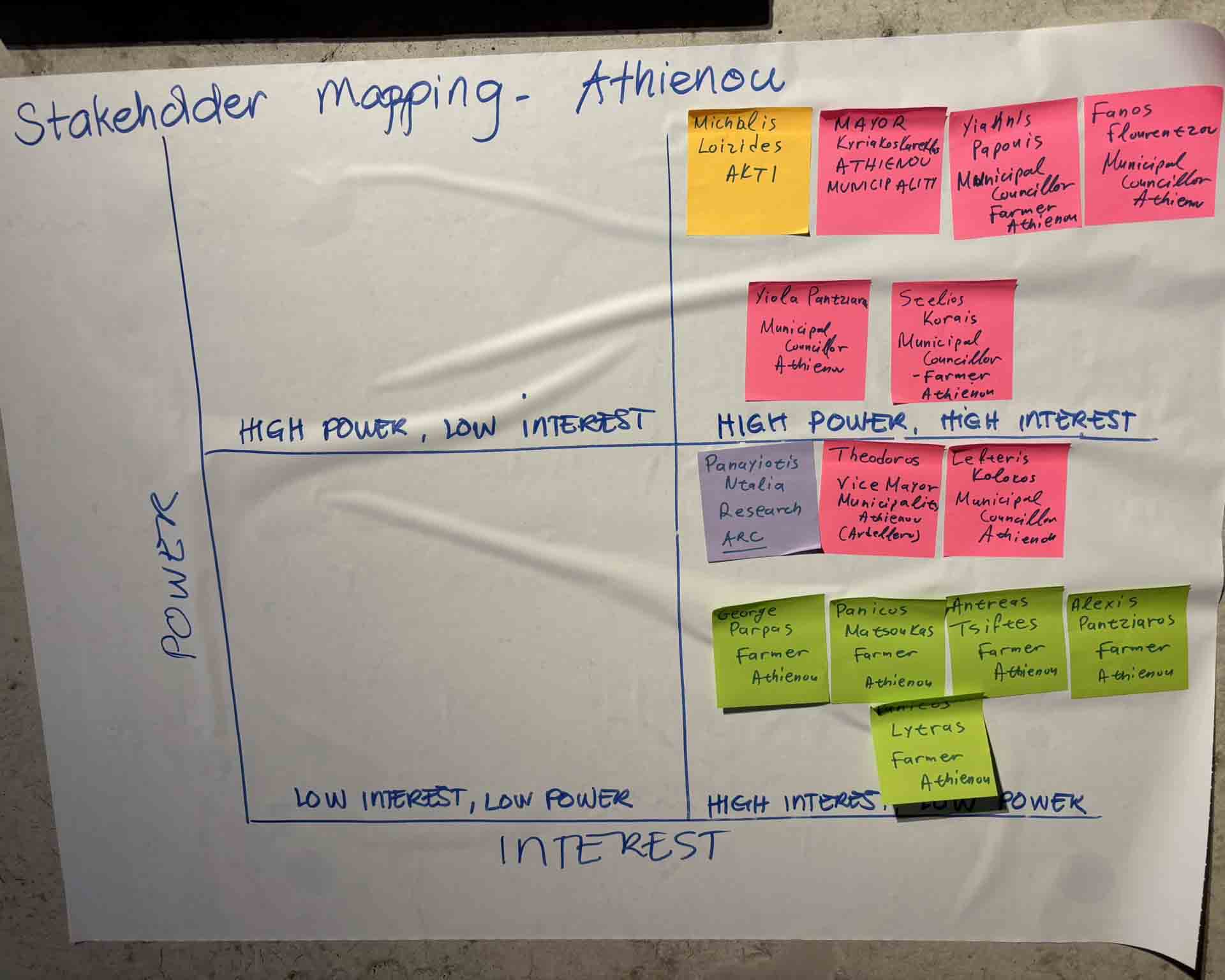
One of the first activities focused on stakeholder mapping through a Power–Interest Matrix exercise. Participants assessed the role, influence, and level of interest of the organisations involved in the future implementation of the composting system.
The exercise identified Athienou Municipality, key municipal representatives, and AKTI Project and Research Centre as high-power, high-interest stakeholders that should remain closely involved throughout the project. Farmers, livestock producers, and research representatives were mainly identified as low-power, high-interest stakeholders. Although they have less formal influence, participants recognised that their practical knowledge and willingness to adopt the proposed system will be essential for its successful implementation. The exercise also showed that no significant low-interest stakeholder group was identified, indicating that future engagement should focus on coordinated action, trust-building, and clearly assigned responsibilities.
The workshop also provided an opportunity to identify the main challenges that need to be addressed before a local composting model can be successfully implemented. Participants highlighted the need for practical training on compost quality, correct field application, soil benefits, and legal manure management procedures. Building confidence in the quality of the final compost product also emerged as a priority, with concerns raised about plastics, poorly shredded material, and inconsistent product quality.
In addition, discussions highlighted uncertainty regarding permits, storage requirements, quality standards, sampling obligations, and eligibility for subsidies. Stakeholders also recognised the importance of organising the collection, shredding, transport, and storage of organic materials efficiently, while ensuring that the long-term costs and financial benefits are clearly understood by producers, residents, and the municipality.
Looking ahead, participants identified several priority actions to support the next stages of the project. These include quantifying the locally available manure, olive prunings, green waste, and other organic feedstocks; documenting the legal and technical requirements that will apply to the future composting system; and testing a workable collection model for olive prunings. Participants also highlighted the importance of field demonstrations and direct outreach to producers to transform the strong interest shown during the workshop into active participation.
Overall, the workshop provided valuable insights into local priorities, stakeholder perspectives, implementation challenges, and capacity-building needs. It also strengthened collaboration between the municipality, farmers, researchers, and other key actors, laying the foundations for developing a locally adapted composting model that supports climate resilience and circular resource management in Athienou.
Through the NURISH Stakeholders Workshops, the project continues to foster dialogue, knowledge exchange, and collaboration between local communities and key stakeholders, helping to develop Nature-based Solutions (NbS) that respond to the specific needs of rural territories across Europe.