
Concept & Methology

Our Approach
A Unified Vision for Regenerative Rural Resilience

NURISH introduces a comprehensive approach to help rural and small urban communities understand climate risks, identify opportunities and develop long lasting strategies for resilience. The project integrates science-based methodologies, community engagement, Nature-based Solutions and digital innovation into a unified vision for Regenerative Rural Resilience.
This approach recognises the complexity of rural environments and supports territories in strengthening their adaptive capacity while creating benefits for people, ecosystems and local economies.
At the heart of this approach are two core methodological components the Regenerative Rural Resilience Framework (RRRF) and the Reapplication Framework (RAF) which ensure that solutions developed in the Resilience Hubs can be transferred and adapted to the Resilience Nodes and beyond.


2
Core Frameworks
4
Project Phases
4
Resilience Hubs
5
Resilience Nodes
framework overview
The NURISH Framework at a Glance
NURISH is built on a comprehensive set of objectives that together create a pathway for lasting climate resilience in Europe’s rural territories.
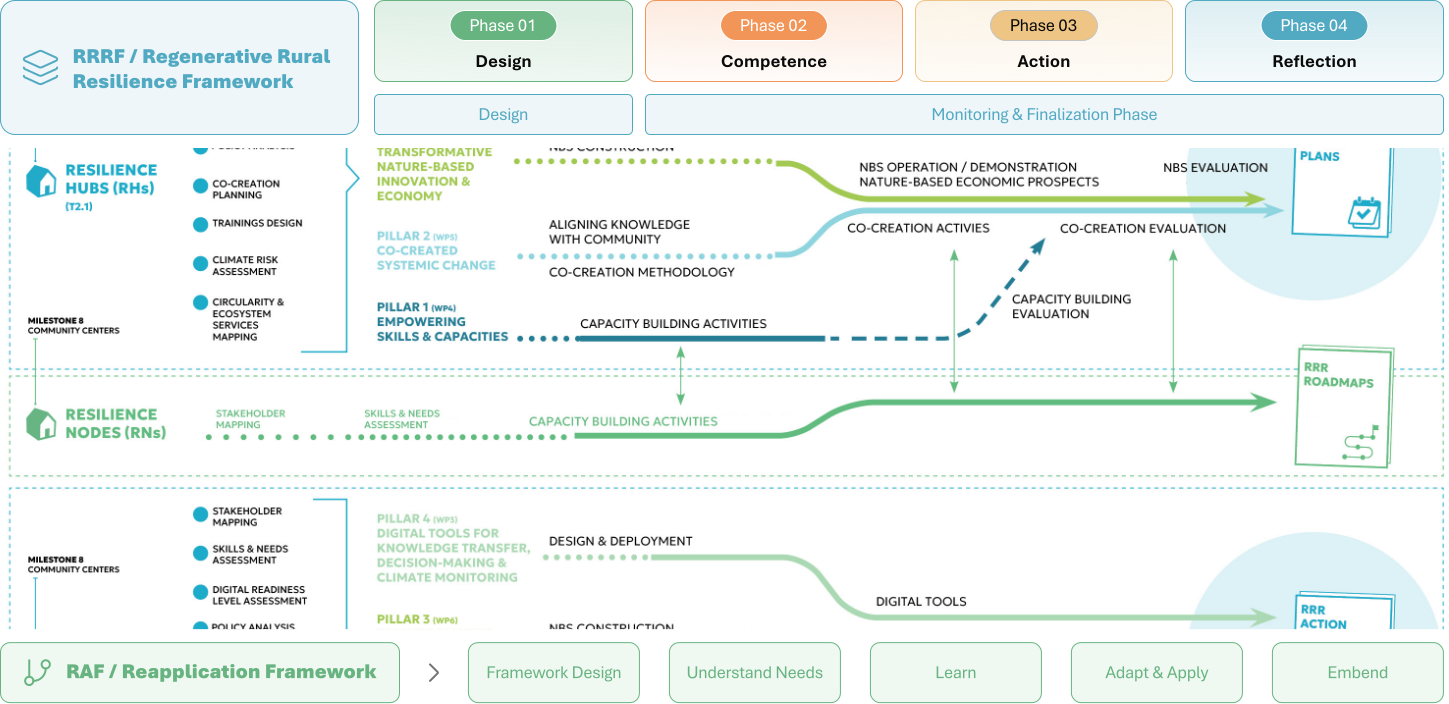



Regenerative Rural Resilience Framework
The RRRF guides rural communities in analysing climate risks and co-designing adaptation strategies that integrate Nature-based Solutions, community participation and digital tools. It reflects the project’s vision of a regenerative transition where communities build prosperity through healthier ecosystems, enhanced capacities and inclusive governance.
- Co-design of NbS-integrated adaptation strategies
- Place-based, context-specific resilience planning
- Integration into rural policies and decision-making
- Open methodology for regions, agencies and policymakers
Phase flow
Analyse Risks
Map Pressures
Co-design
Integrate NbS
Monitor

Reapplication Framework
The RAF transfers knowledge and solutions from the Resilience Hubs to the Nodes through a structured replication process. It helps communities adapt NbS, digital tools and governance models to their own conditions building long-term local ownership and supporting EU Mission Adaptation objectives.
- Structured replication from Hubs to Nodes
- Local context, risk assessment and intervention identification
- Adaptation of NbS and digital solutions
- Actionable RRR Roadmaps as outputs
Sequential process
Design
Understand
Learn
Adapt & Apply
Embed
Explore the Pillars
See how these frameworks are applied through NURISH’s Pillars.