
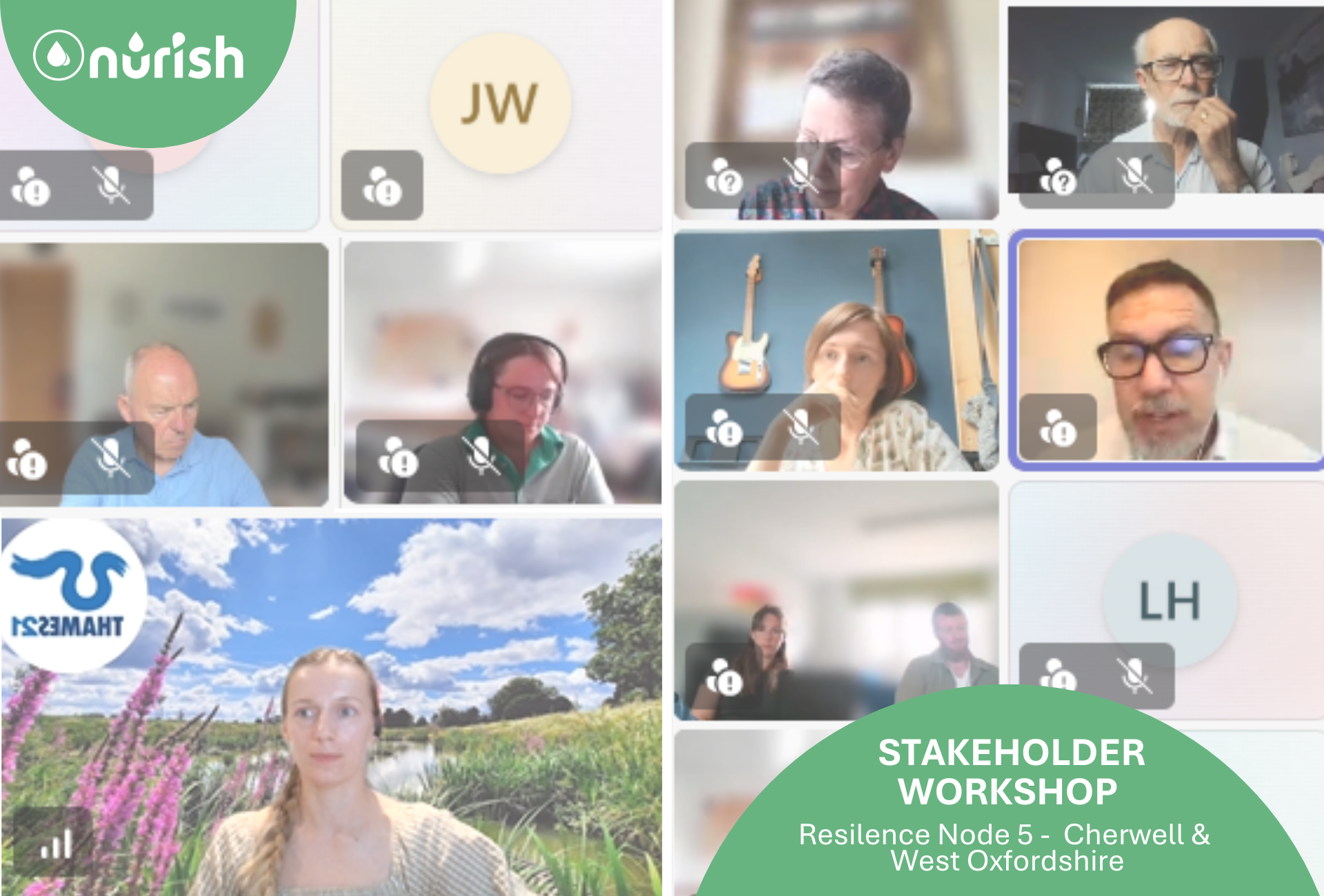
As part of the NURISH Stakeholder Workshops series, representatives from environmental organisations, local authorities, community groups and the Environment Agency came together to explore opportunities for strengthening climate resilience through Nature-based Solutions (NbS) in Cherwell and West Oxfordshire.
The workshop was held on 27 July 2026 as part of the Cherwell and Ray Catchment Partnership meeting, using a hybrid format that combined in-person and online participation. The Catchment Partnership provided an ideal setting for stakeholder engagement, bringing together organisations actively working across the resilience node area. Through its co-hosting role within the partnership, Thames21 was able to build on its established relationships with local stakeholders and facilitate discussions around shared priorities for climate adaptation.
The session focused on identifying stakeholder priorities, capacity-building needs and opportunities to support the wider implementation of Nature-based Solutions across the region. Participants highlighted a strong interest in NbS as a key approach to addressing local climate challenges, while recognising that a better understanding of local climate impacts and resilience is essential to support future action.
Discussions also revealed that stakeholder priorities vary depending on their role. Environmental organisations and landowners placed particular emphasis on achieving positive environmental outcomes, while community groups highlighted the importance of addressing local impacts and ensuring that proposed solutions can be implemented in practice. Representatives from the farming sector stressed the need for accessible funding opportunities and financially viable projects that can encourage wider uptake of Nature-based Solutions.
A key outcome of the workshop was the identification of opportunities to strengthen collaboration between Oxfordshire County Council, parish councils, community groups and environmental organisations. Participants agreed that building on existing partnerships will be essential to accelerate knowledge exchange, capacity building and the delivery of Nature-based Solutions across Cherwell and West Oxfordshire.
The discussions also confirmed that the Cherwell and Ray Catchment Partnership provides a strong foundation for future collaboration, offering an established network through which stakeholders can continue exchanging knowledge, developing skills and working together to enhance climate resilience.
The insights gathered during the workshop will help guide the next stages of the NURISH activities within the Cherwell & West Oxfordshire Resilience Node, supporting the co-development of locally adapted Nature-based Solutions and reinforcing collaboration between organisations working towards a more resilient future for the region.
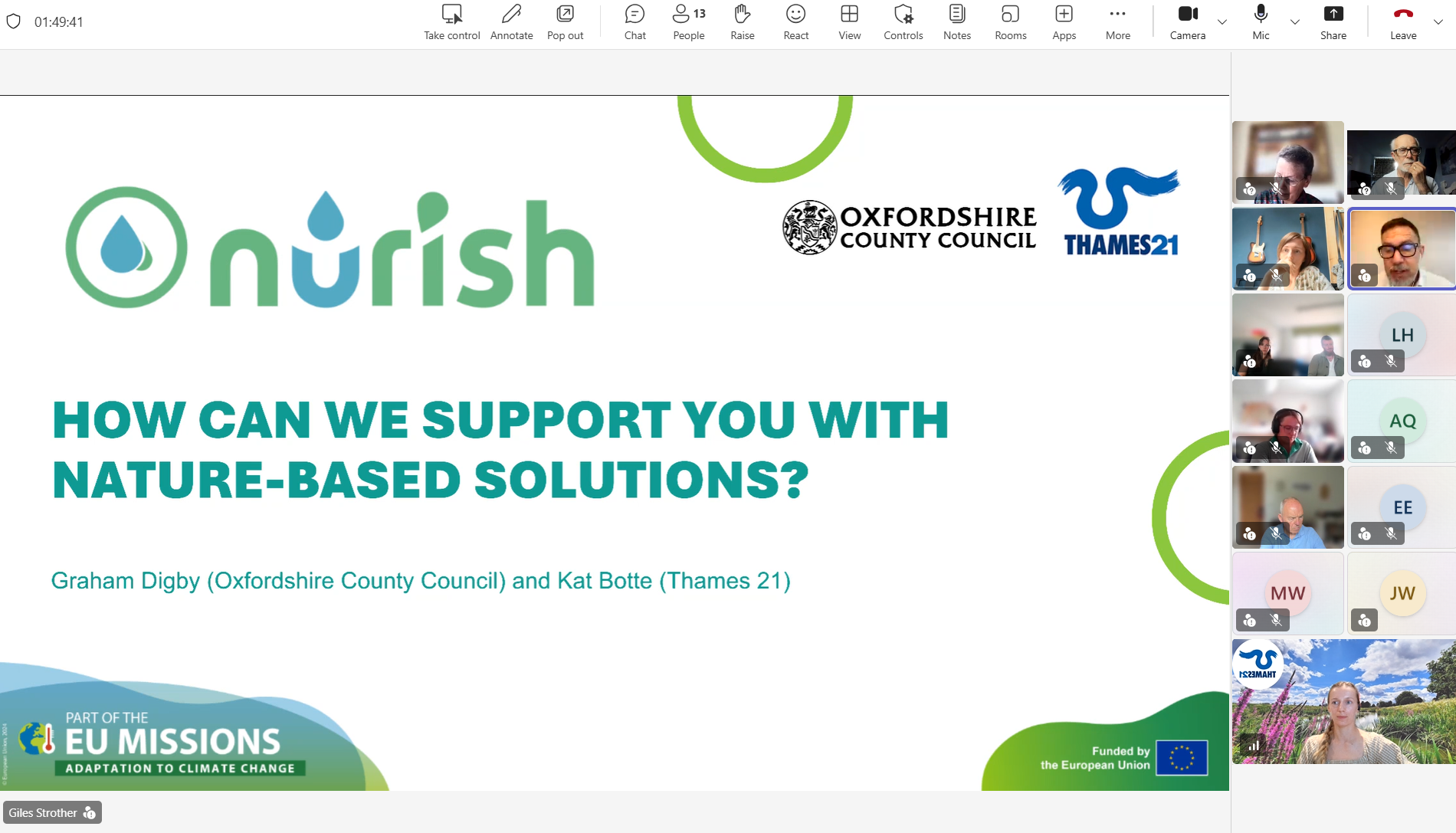
As part of the NURISH stakeholder engagement work in the Cherwell and West Oxfordshire Resilience Node, a hybrid (mixture of online and in-person) workshop was delivered during the Cherwell and Ray Catchment Partnership meeting on the 27th of July 2026. The Catchment Partnership provided an ideal forum for engagement as its members work across West Oxfordshire, the focus area for the resilience node, and Thames21 has established relationships with many of the participating organisations through its co-hosting role within the partnership. Representatives from NGOs, local authorities, community groups and the Environment Agency contributed to discussions on stakeholder priorities, capacity needs and opportunities for nature-based solutions (NbS).
The workshop highlighted strong interest in NbS across the catchment, with stakeholders identifying knowledge of local climate impacts and resilience as a key training need. Different groups expressed differing priorities: NGOs and landowners were primarily concerned with environmental outcomes, while community groups focused on local community impacts and practical implementation. Farming representatives emphasised the importance of funding opportunities and the financial viability of projects. The exercise also identified opportunities for increased collaboration between Oxfordshire County Council, parish councils, community groups and environmental organisations, while confirming that existing Catchment Partnership relationships provide a strong foundation for future knowledge-sharing, training and NbS delivery across the region.