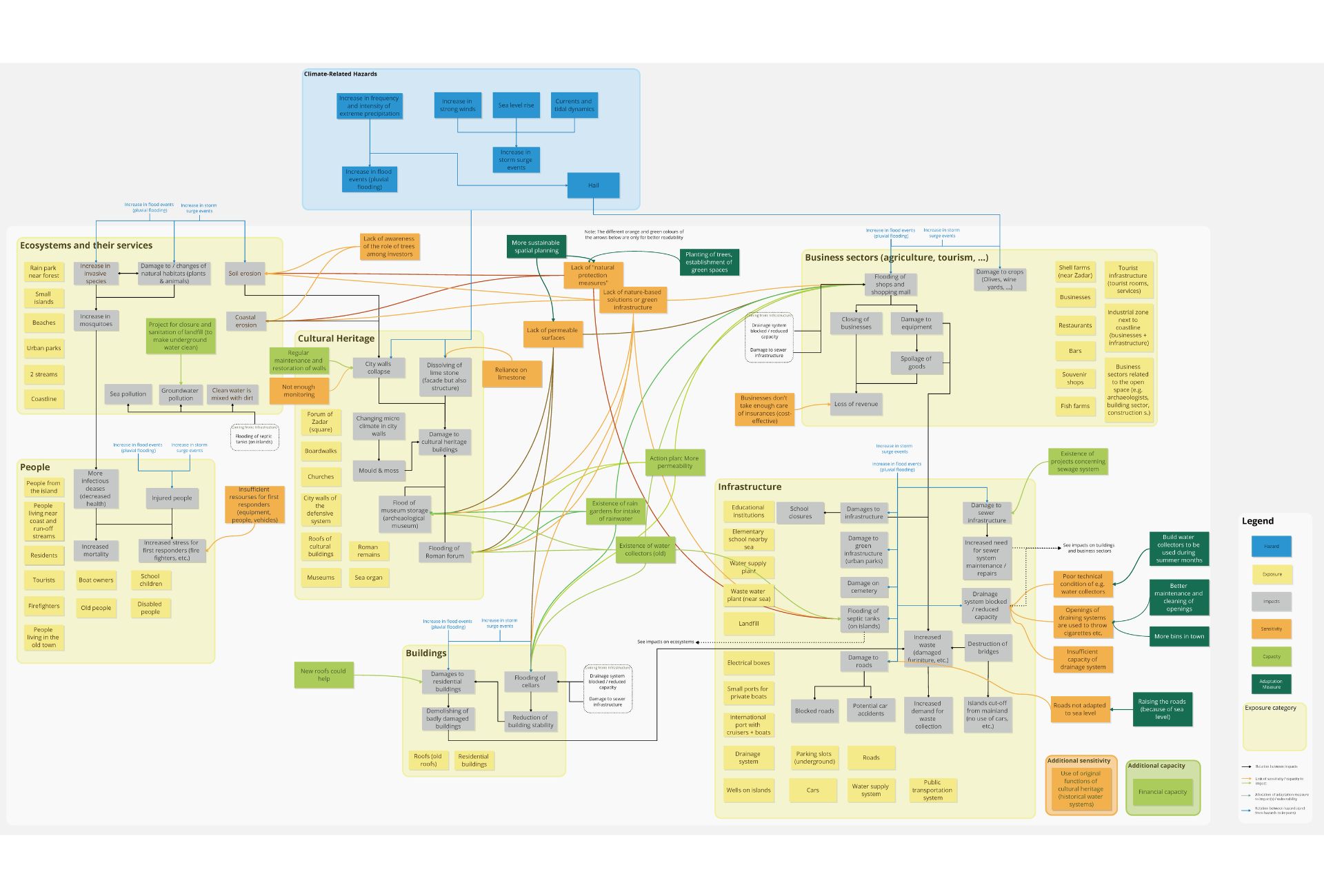
How tracing hazard, exposure, and vulnerability along a single chain supports sound climate risk analysis — and brings stakeholders into the process.
What Is a Climate Impact Chain?
A climate impact chain is a cause-effect model that traces how a climate-related hazard translates into a concrete impact on a specific system, place, or group of people. Following the approach widely used in climate risk and vulnerability assessments, the chain links three core elements: a hazard — such as heatwaves, drought, heavy rainfall, or sea-level rise; the exposure of people, assets, or ecosystems to that hazard; and the direct and indirect impacts the hazard has on the exposed elements. Information is complemented by sensitivity (factors increasing the impact) and capacity (factors helping to cope with the impact). Drawn as a diagram, the chain illustrates how these factors interact to form the risk.
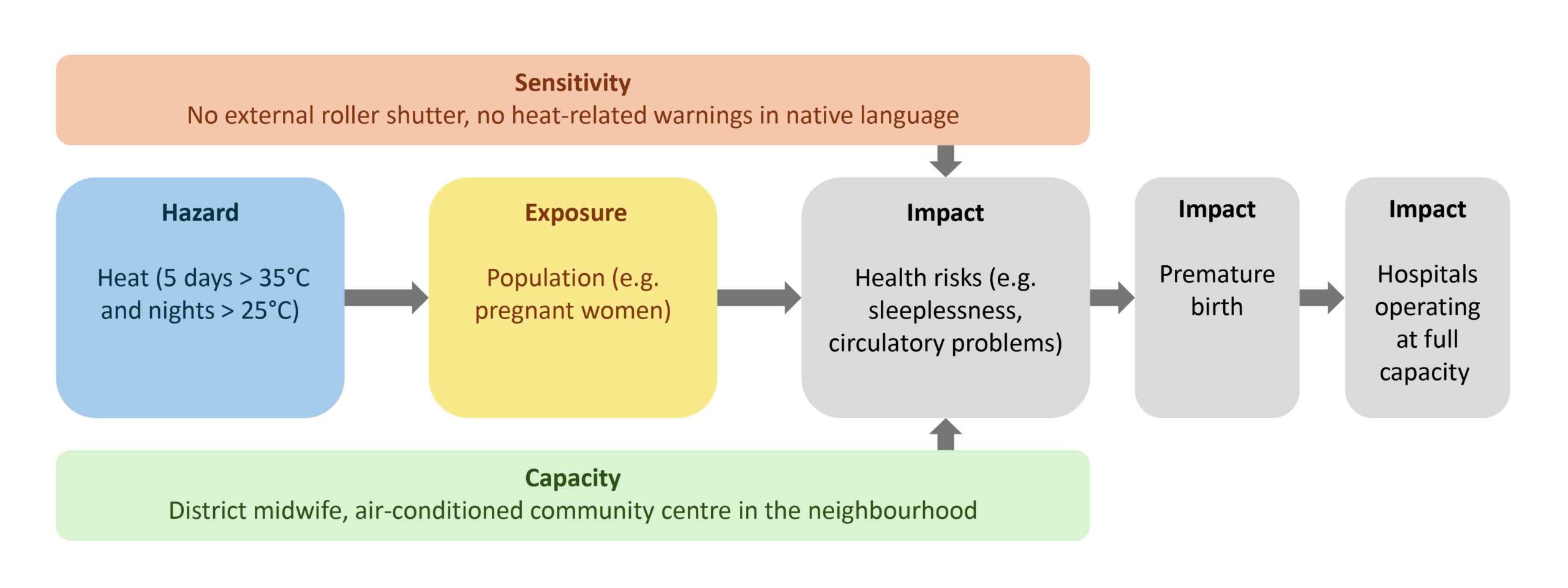
Rather than treating climate risk as a single abstract number, an impact chain makes visible the processes driving the risk. This turns an otherwise implicit understanding of risk into a shared, inspectable picture that experts and non-experts alike can read, question, and refine.
How Impact Chains Are Used for Climate Risk Analysis
Impact chains are a core building block of structured climate risk and vulnerability assessments. In this context, they serve several closely related purposes:
- Structuring complexity — breaking down a broad question such as «How does heat affect the local population?» into the specific hazard, exposure, and vulnerability factors that actually drive the impact, so that no relevant driver is overlooked.
- Selecting indicators and data — once the driving factors are visible as boxes in the chain, each one can be matched to a measurable indicator (e.g. number of hot days, number of midwifes per population), which anchors the risk assessment in concrete, available data.
- Identifying entry points for adaptation — because the chain shows exactly where hazard, exposure, and vulnerability interact, it also reveals where an intervention could most effectively reduce risk, whether through early-warning systems, land-use planning, or social safety nets.
In short, impact chains turn climate risk from a vague concern into a structured, evidence-based model that can be assessed, monitored, and acted upon.
Why Impact Chains Are a Good Tool for Stakeholder Engagement
Climate impact chains work particularly well as engagement tools because they are visual, structured, and easy to build on incrementally. A diagram of boxes and arrows gives people with very different backgrounds — climate scientists, local authorities, farmers, planners, or community members — a common language to point at, question, and adjust, without requiring everyone to master the same technical vocabulary first.
Because the chain lays out hazard, exposure, impact, sensitivity and capacity step by step, it invites stakeholders to challenge or refine specific links rather than the whole risk narrative at once. A farmer might point out an exposure factor that data alone would miss; a hydrologist might flag an underestimated hazard pathway; a local official might highlight a capacity gap driving vulnerability. Each contribution improves one shared model rather than competing accounts of «the» climate risk, which tends to keep discussions constructive and grounded in local reality.
This structure also makes engagement more equitable. Stakeholders who might otherwise stay quiet in an open-ended discussion often find it easier to comment on a concrete box or arrow than to respond to an abstract question about climate risk. In this way, impact chains lower the barrier to participation while still producing a rigorous, traceable risk assessment.
The Benefit of Co-Creative Approaches
Building a climate impact chain co-creatively — with stakeholders in the room rather than for them — changes both the quality of the risk analysis and the way it is received afterwards.
- Better knowledge integration: local and practical knowledge of hazards, exposure, and coping capacity is combined with scientific and technical expertise, producing a risk model that is more realistic and complete than one drafted by a single team.
- Stronger legitimacy and ownership: when stakeholders help shape the chain themselves, they are far more likely to trust its conclusions and support the resulting adaptation measures, rather than perceiving the risk assessment as externally imposed.
- Early detection of blind spots: co-creation surfaces overlooked hazards, exposure factors, or vulnerability drivers while the analysis is still on paper, when they are cheap to address, instead of after adaptation measures have already been designed.
- Capacity building and relationship building: the process of jointly discussing hazards, exposure, and vulnerability builds shared understanding and trust among participants that outlasts the workshop and supports collaboration on future adaptation action.
Taken together, these benefits are why climate impact chains are increasingly used not simply as an analytical device, but as the backbone of participatory, co-creative risk assessment processes: they give diverse stakeholders a concrete, shared model of climate risk to build, question, and improve — and, in doing so, a genuine stake in the resulting adaptation response.
Climate Impact Chains in Practice
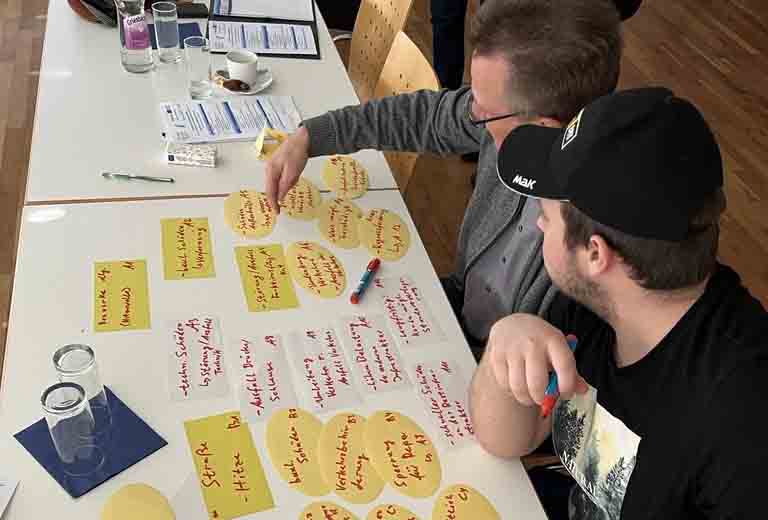
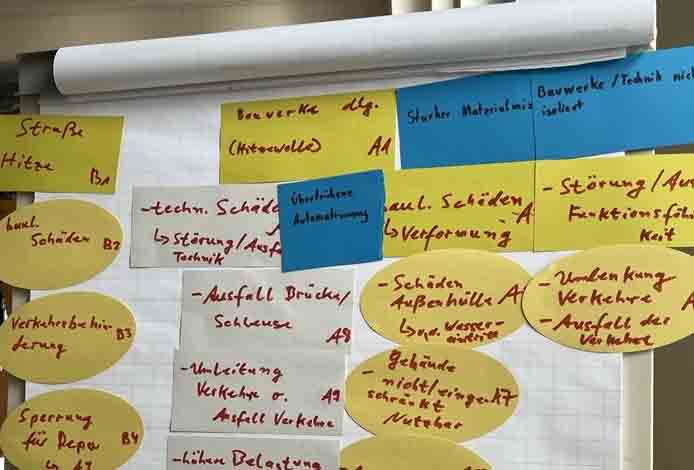
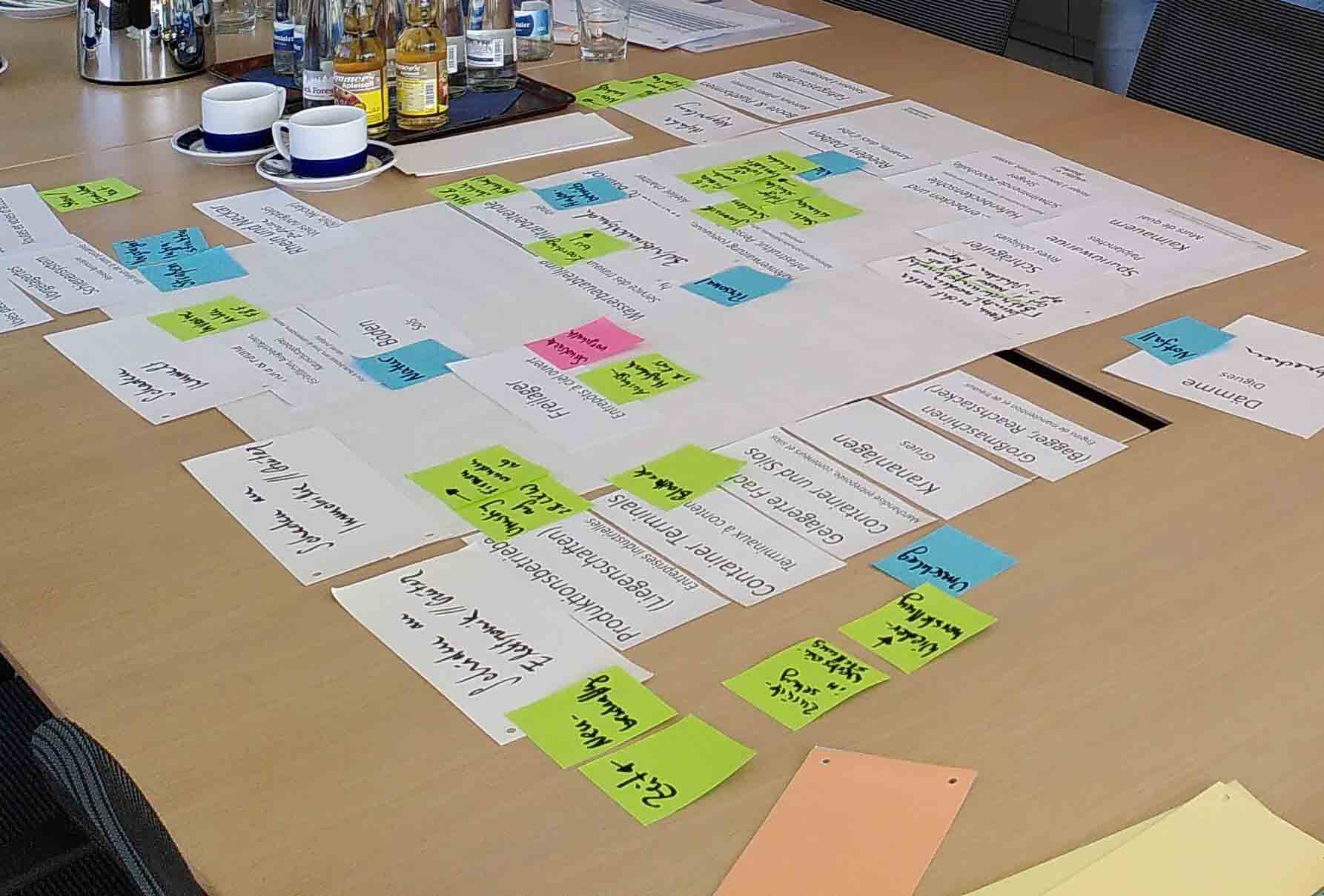
The Fraunhofer IAIS Sustainability and Resilience Team frequently co-creates Climate Impact Chains with various stakeholders, e.g. in the RescueME, CRANE, UNCHAIN or FairFuture projects. Workshops with local stakeholders lead to complex Climate Impact Chains, that finally guide the way to adaptation measures.