
The transition toward climate-resilient rural areas is at the heart of the NURISH vision, which promotes regenerative practices in community development, economic growth, governance, and climate adaptation planning. By integrating technological, circular, and social innovations, nature-based solutions are emerging as powerful tools to strengthen resilience in rural regions.
Viticulture, a key economic activity in many rural areas, has been increasingly affected by climate change in recent years. Like other agricultural sectors, grape cultivation faces growing challenges linked to water management. One of the most critical aspects is the management of the water cycle, both in vineyards and during wine production.
A significant component of this cycle is winery wastewater. The wine industry generates large volumes of wastewater during grape crushing and pressing, as well as from cleaning fermentation tanks, barrels, equipment, and production facilities. This wastewater is highly variable in both quantity and quality, often characterized by long periods of low discharge due to the seasonal nature of wine production.
Despite this variability, winery wastewater typically contains high levels of suspended solids and organic matter. Its biological oxygen demand can reach values up to ten times higher than those found in domestic wastewater, making effective treatment essential.
Constructed Wetlands (CWs) are increasingly recognized as a sustainable and efficient solution for treating winery wastewater. Compared to conventional systems, CWs offer several advantages, including high removal efficiencies and low maintenance, energy, and operational costs.
To achieve optimal treatment performance, different wetland configurations are often combined. These include Free Water Surface systems (FWS), Horizontal and Vertical subsurface flow wetlands (HF e VF), and intensified solutions such as Forced Bed Aeration (FBA) and French Reed Beds (FRB). Such hybrid systems ensure stable and high treatment efficiencies, with removal rates reaching up to 90% of Chemical Oxygen Demand (COD) during peak production periods.
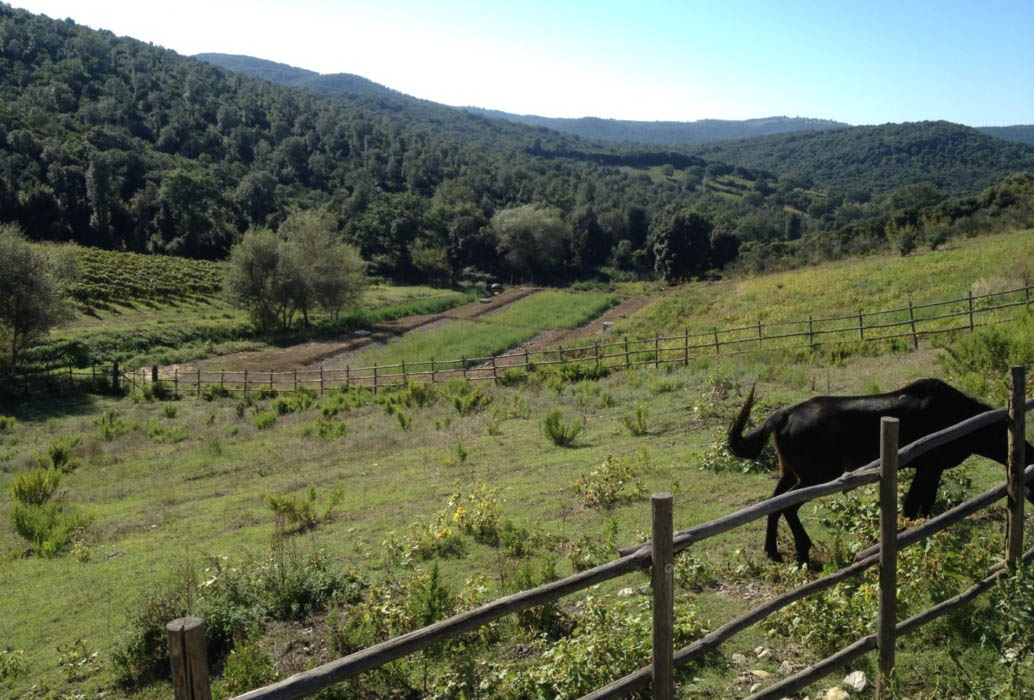
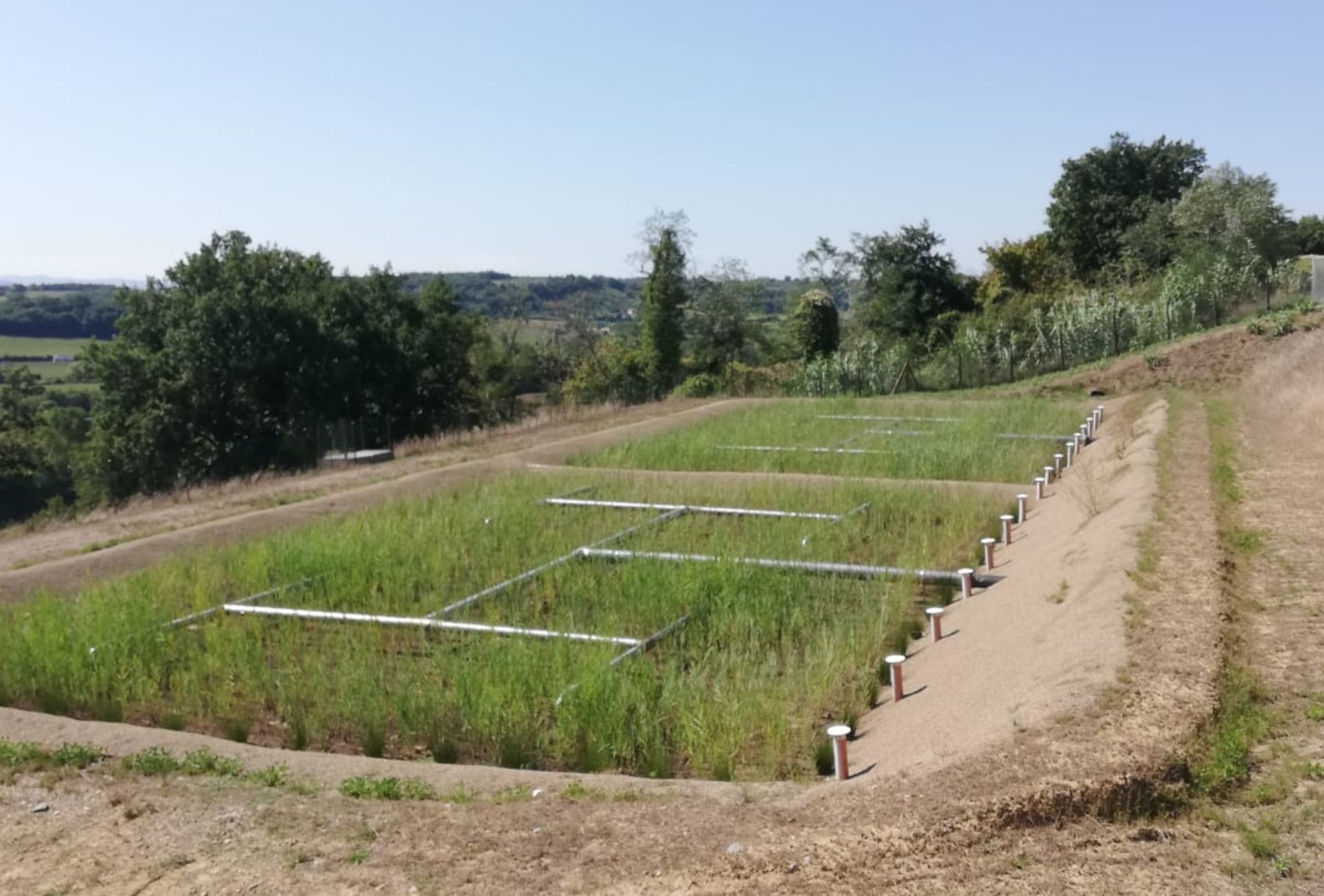
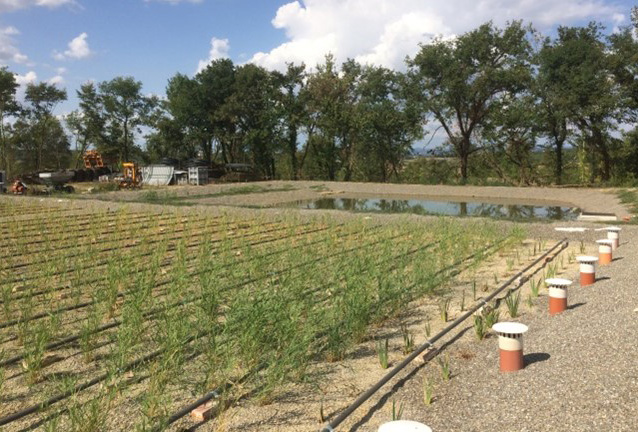
Design choices are based on several factors, such as the type of wastewater, the discharge limits that must be achieved, and the available space for the treatment plant. In a first example, in the province of Grosseto (Figure 1), a winery producing approximately 4000 quintals of wine per year (615 population equivalent, PE, based on organic load) generates wastewater used throughout the entire production cycle (vinification, racking, and bottling). For this case, a HF wetland with a surface area of 460 m² was implemented. In a second example, in the province of Siena (Figure 2), where production is higher (12000 quintals of wine per year, corresponding to about 1300 PE), a FRB was installed upstream of the HF system to effectively treat the wastewater while occupying a total area of 1100 m². In a third case, in the province of Florence (Figure 3), wastewater from the winery is combined with that from offices and residential buildings. In this case, within an area of 1200 m², a treatment train composed of three systems was adopted: first an HF, followed by a VF, and finally a FWS.
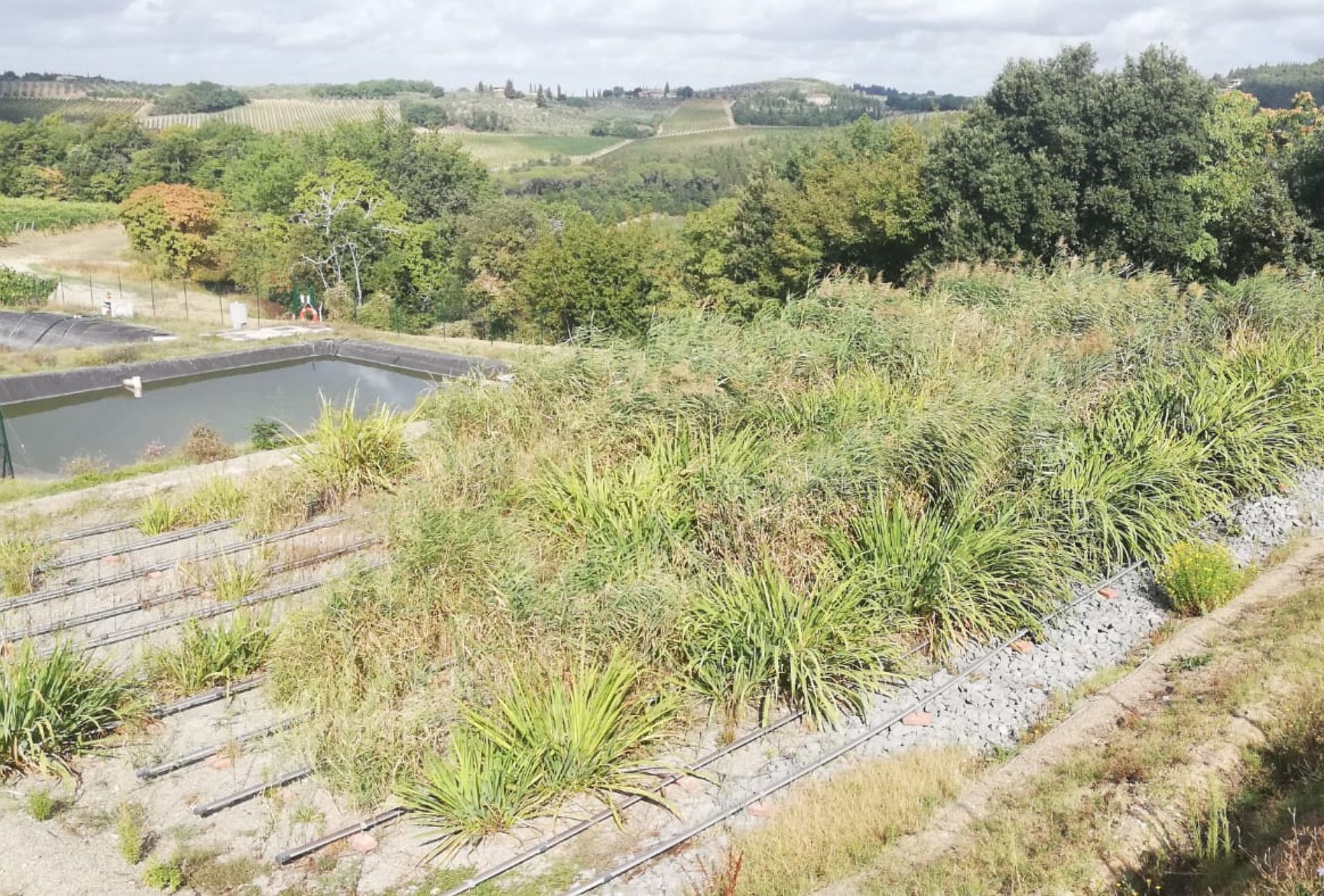
This configuration ensures compliance with discharge limits for a winery producing approximately 8000 quintals of wine per year (480 population equivalent). In another plant located in the province of Siena (Figure 4), designed to treat up to 770 PE (based on organic load), an intensified wetland system was added to previously existing ponds to enable discharge into a water body. The current treatment scheme consists of a first stage with anaerobic ponds, and a second stage with aerated wetlands FBA technology. The use of aerated wetlands made it possible to minimize the required surface area, which was limited.
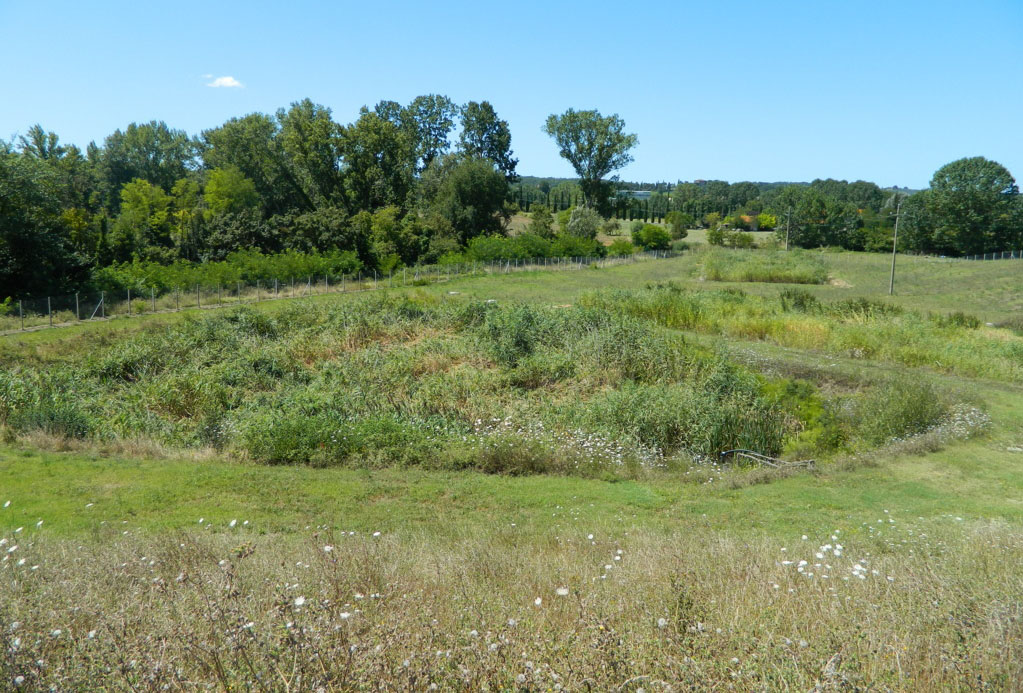
In addition to the different possible configurations, treatment systems can also be expanded if the winery production capacity increases. For instance, in a winery in the province of Siena (Figure 5) where flow rates doubled, the existing system (composed of an HF and an FWS) was upgraded by installing three FRB units upstream and adding a second HF unit in parallel. Furthermore, a sand filter was integrated before the discharge point. The upgraded system can treat wastewater with an organic load equivalent to 1900 PE and occupies a total area of 3,010 m². Further details on this plant are available in the related publication (Rizzo et al, 2020).
Over the years, IRIDRA has established itself as a leader in the field of natural wastewater treatment systems, particularly constructed wetlands. The company has been involved in the design, monitoring, and study of hundreds of treatment plants, while actively promoting the adoption of these systems at both national and international levels.
In the specific context of winery wastewater, IRIDRA has designed more than 30 treatment plants for wineries with production capacities ranging from 700 to 24000 quintals of wine per year. These systems integrate various wetland technologies to ensure effective and reliable treatment.
Nature-based solutions (NBSs) applied to winery wastewater not only achieve high treatment efficiencies and discharge limits but also enable the potential reuse of treated water in vineyards. This contributes to more sustainable water management and enhances the resilience of wine production to climate change. Furthermore, the low maintenance requirements and reduced operational costs make these systems particularly suitable for direct integration and management by wineries.
References:
- Rizzo, R. Bresciani, N. Martinuzzi, F. Masi. Online Monitoring of a Long-Term Full-Scale Constructed Wetland for the Treatment of Winery Wastewater in Italy. Appl. Sci. 2020. https://doi.org/10.3390/app10020555
- Masi, J. Rochereau, S. Troesch, I. Ruiz, M. Soto. Wineries wastewater treatment by constructed wetlands: a review. Water Sci Technol. 2015. https://doi.org/10.2166/wst.2015.061
- Marzo, J. R. M. Silva, F. Masi, A. Rizzo, G. L. Cirelli. A review of the full-scale constructed wetlands for the treatment and management of winery wastewater. Current Opinion in Environmental Science & Health. 2025. https://doi.org/10.1016/j.coesh.2025.100680
- van Oirschot, S. Wallace, A. Freeman, C. Murphy, R. Bresciani, S. Troesch, A. Petitjean. Chapter 22 – Emerging development in application, design, and operations & maintenance of aerated treatment wetlands. Emerging Developments in Constructed Wetlands, Elsevier. 2025. https://doi.org/10.1016/B978-0-443-14078-5.00022-2