
The Finnish partners in the EU NURISH project include the municipalities of Ranua and Pudasjärvi, Pohjois-Suomen Biokaasu Oy, and VTT Technical Research Centre of Finland Ltd. In the Finnish Resilience Hub, the project explores, among other things, how lake sediments could be used as feedstock for a biogas plant while simultaneously improving lake water quality. This theme connects local environmental management, the circular economy, rural vitality, and new forms of cooperation between municipalities, businesses, research organisations and residents.
The NURISH consortium will meet in Pudasjärvi from 29 September to 1 October 2026. The meeting provides a valuable opportunity to reflect on how Ranua and Pudasjärvi are perceived by outsiders, not only by project partners, but also within Finnish public debate. To explore this, we compiled an overview of how both municipalities have appeared in recent years in news stories and other articles published by Helsingin Sanomat, Finland’s largest newspaper.
Pudasjärvi: log construction, northern nature and regional politics
In Helsingin Sanomat, Pudasjärvi appears above all through the themes of the economy, construction and regional vitality. One particularly prominent topic is Kontiotuote (Kontio), whose EUR 250 million international framework agreement was presented as a major opportunity for both the company and the entire municipality. The articles portray Pudasjärvi as a place where the success of one major employer directly affects families’ confidence in the future, the municipal tax base and the local atmosphere. At the same time, later reporting reminds readers that large export projects also involve uncertainty: one year later, the framework agreement had not yet resulted in actual deliveries.
Another recurring theme linked to Pudasjärvi is northern nature as an economic and cultural resource. In an article about kuntta, Pudasjärvi appears as part of a wider forest zone in Northern Ostrobothnia and Kainuu, where forest-floor vegetation is harvested and transported to gardens in southern Finland. The story highlights an interesting south–north perspective: while people in southern Finland seek natural-looking garden landscapes, the material that makes them possible comes from northern commercial forests. Pudasjärvi therefore appears not only as a landscape, but also as part of a wider discussion on the use of nature, forestry and consumer culture.
What is kuntta?
Kuntta, often translated as forest floor turf or forest floor mat, refers to the surface layer of the forest floor where dwarf shrubs, mosses, lichens and other low-growing vegetation naturally grow. It is harvested mainly from northern coniferous forests and used in gardens and landscaping to recreate natural forest environments. Although visually attractive and relatively low-maintenance, its use also raises questions about ecological impacts, regeneration and the origin of landscaping materials.
From a political perspective, Pudasjärvi is strongly associated with the Centre Party and with the voice of small municipalities. A profile article on Member of Parliament Olga Oinas-Panuma presents the village of Panuma as a place where rural everyday life, attachment to one’s home region, nature, climate change, artificial intelligence and regional politics intersect. Rather than being portrayed simply as a remote municipality, Pudasjärvi emerges as a place from which broader questions about Finland’s future and regional equality can be discussed.
Education and tourism also feature in the municipality’s public image. An article about the Syöte «Tunturikoulu» mountain school presents Pudasjärvi as an innovative and flexible municipality that offers families from southern Finland the opportunity to spend time in a fell landscape without interrupting their children’s education. In this context, Pudasjärvi is associated with winter scenery, remote working, family life and new opportunities for rural living.
Ranua: tourism, community, entrepreneurship and northern everyday life
In Helsingin Sanomat, Ranua appears even more strongly than Pudasjärvi through the stories of its people, local initiatives and everyday life in northern Finland. The municipality’s best-known national attraction is Ranua Wildlife Park. An article about Sisu, a polar bear cub, presents Ranua as an international tourist destination where Arctic nature, the wildlife park and Lapland tourism come together. Ranua is portrayed as a place people travel to specifically because of its northern and Arctic character.
Entrepreneurship is another key theme in the municipality’s public image. An article about the furniture company Veke tells a strong success story: while many traditional furniture retailers were struggling, a company based in Ranua managed to grow by investing early in e-commerce. In this context, Ranua is not portrayed as a remote peripheral municipality, but as a place capable of competing successfully in national markets.
Ranua’s strong sense of community is illustrated by the story of The Book Bar. After the village lost its last traditional pub, a local entrepreneur transformed the former library into a new meeting place. The article reflects both the decline of local services and the creativity of rural communities: an empty building was given a new purpose, while bookshelves and materials from the former library found a second life. Ranua is presented as a shrinking but proactive municipality where local people actively seek solutions to the loss of everyday services.
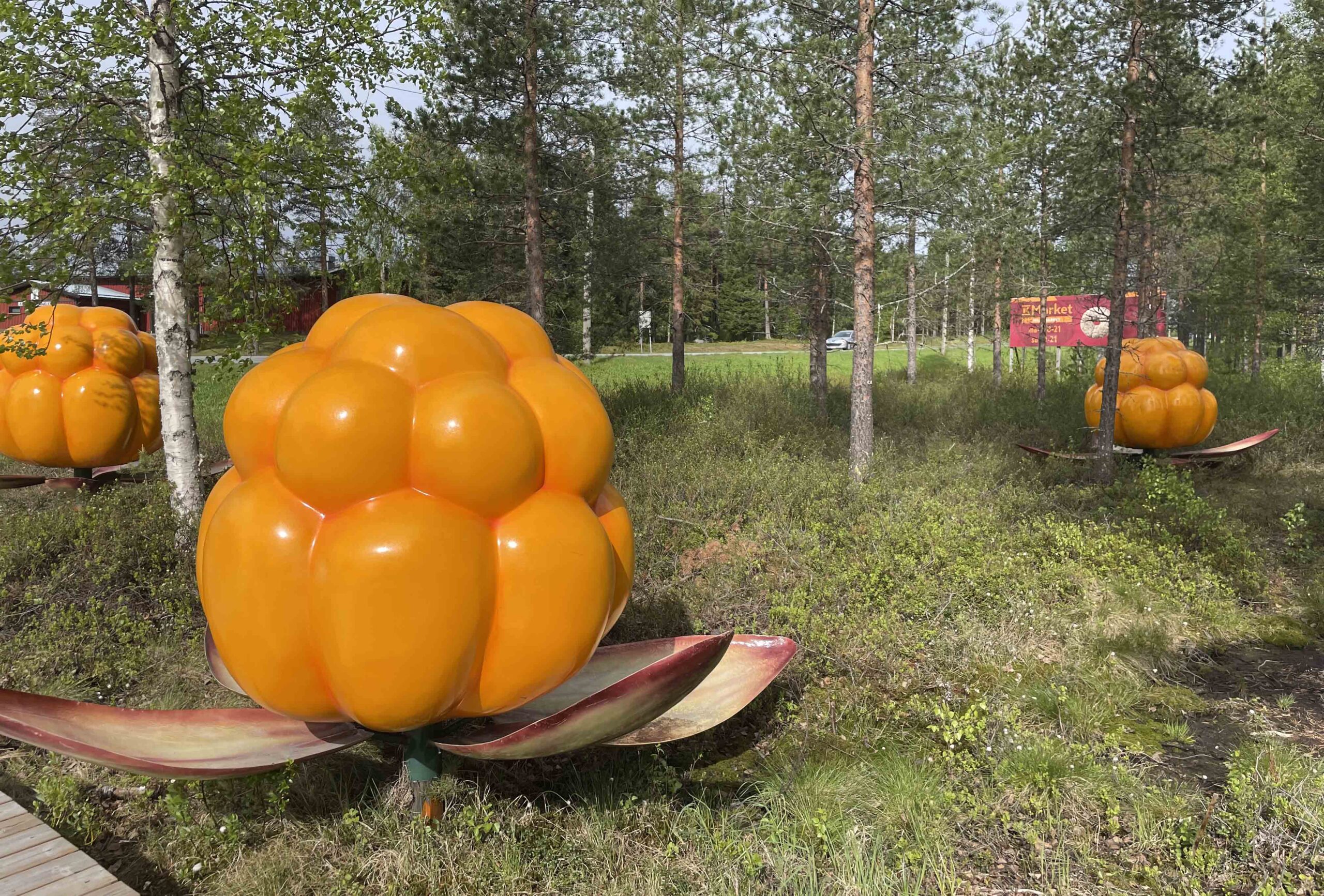
Environmental themes also feature prominently in reporting about Ranua. In an article on the annual cloudberry harvest, the municipality is described as being located on the southern border of Lapland, where cloudberries are an important part of local identity. An unusually snowy period at the end of May raised concerns about the harvest, although the cold spring ultimately protected the flowering plants. Here, nature is portrayed not simply as a landscape, but as an essential part of the local economy, culture and seasonal rhythm.
Ranua’s broader societal role is highlighted in an article about volunteer fire brigades. In sparsely populated areas, volunteers play a vital role in emergency services, yet migration and the departure of younger generations make it increasingly difficult to maintain these organisations. Through this story, Ranua represents a wider challenge facing many rural communities: how to safeguard safety, essential services and civic engagement across areas with long distances and declining populations.
Are there polar bears in Finland?
Yes—but not in the wild. In Finland, polar bears can be seen at Ranua Wildlife Park, but they are not a native wild species. Finland’s only wild bear species is the brown bear. For many international visitors, this can come as a surprise, as Arctic landscapes, Lapland and snowy winters often create the impression that polar bears also live freely in Finnish nature, even though their natural habitat lies much farther north in the Arctic.
What does this overview tell us about northern municipalities?
The Helsingin Sanomat articles show that Ranua and Pudasjärvi are not presented simply as one undifferentiated «northern countryside». Instead, they each emerge with distinct identities, creating a diverse, although selective, picture of both municipalities.
For Pudasjärvi, the emphasis is placed on log construction, export business, regional politics, education and the use of natural resources. For Ranua, the focus is on tourism, local entrepreneurship, community-driven solutions, voluntary work and the distinctive features of northern nature.
The themes are not represented equally. Economic development and local vitality are particularly prominent throughout the articles. Stories about Kontio, Veke, Syöte, the wildlife park and innovative local services receive considerable attention, while culture and everyday life are mainly portrayed through individuals and local meeting places. Politics appears primarily through discussions on regional policy, concerns about maintaining services in small municipalities and the role of rural communities. Environmental topics focus on nature, forests, mires, reindeer husbandry, cloudberries and the northern climate, but much less frequently on issues such as water quality or the circular economy.
From the perspective of the NURISH project, this is an interesting observation. Through the pages of Helsingin Sanomat, readers in southern Finland encounter Ranua and Pudasjärvi primarily as places where demographic change, livelihoods, nature and local inventiveness intersect. NURISH is positioned precisely at this interface, bringing together environmental restoration, biogas production, local resources and the future of rural municipalities.
If a viable solution can be found for the use of lake sediments, it will represent far more than a technical innovation. It will also demonstrate how northern municipalities can create new value from their own landscapes, water bodies and communities.