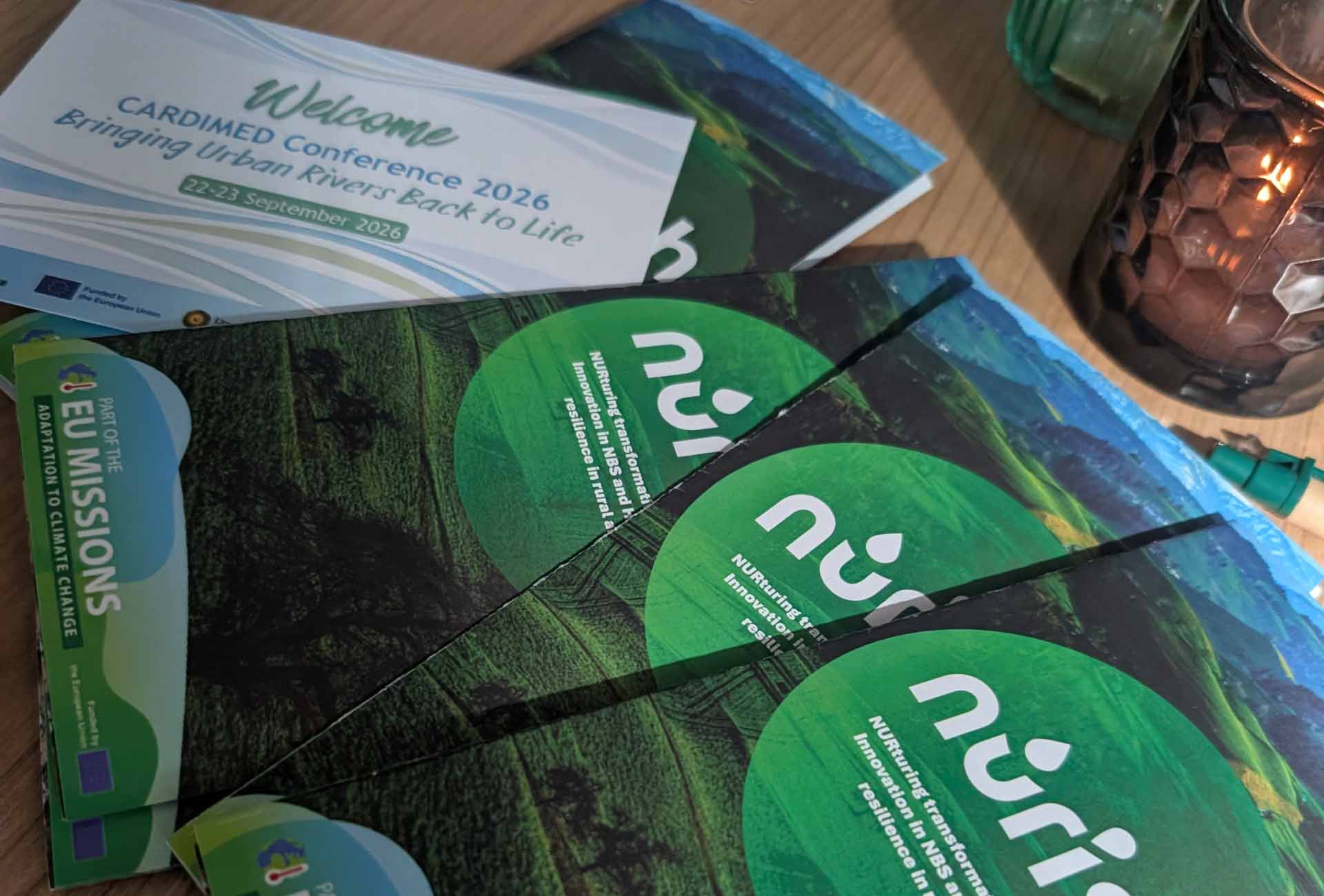
NURISH participated in the CARDIMED Conference «Bringing Urban Rivers Back to Life: Fostering climate resilience by connecting people with water in urban spaces«, held on 22–23 September 2026 in Utrecht, the Netherlands. The conference was organised by Utrecht University, which leads NURISH Work Package 5 on the co-creation of nature-based solutions with digital technologies, policy and governance. It brought together researchers, practitioners, planners, policy makers and artists to explore how cities can renature, regenerate and daylight their rivers, and to co-create a manifesto for the rights to urban rivers.
From CARDIMED to NURISH
NURISH is connected to CARDIMED at a fundamental level! Both projects are coordinated by the National Technical University of Athens (NTUA) and have several partners in common. CARDIMED has involved regions and communities in developing and testing transformative climate and resilience solutions, bringing them closer to the market. NURISH takes this achievement one step further, focusing on rural areas and small and medium-sized communities that design, test and implement resilience measures, becoming active actors of change and examples for others to follow.
NURISH at the conference
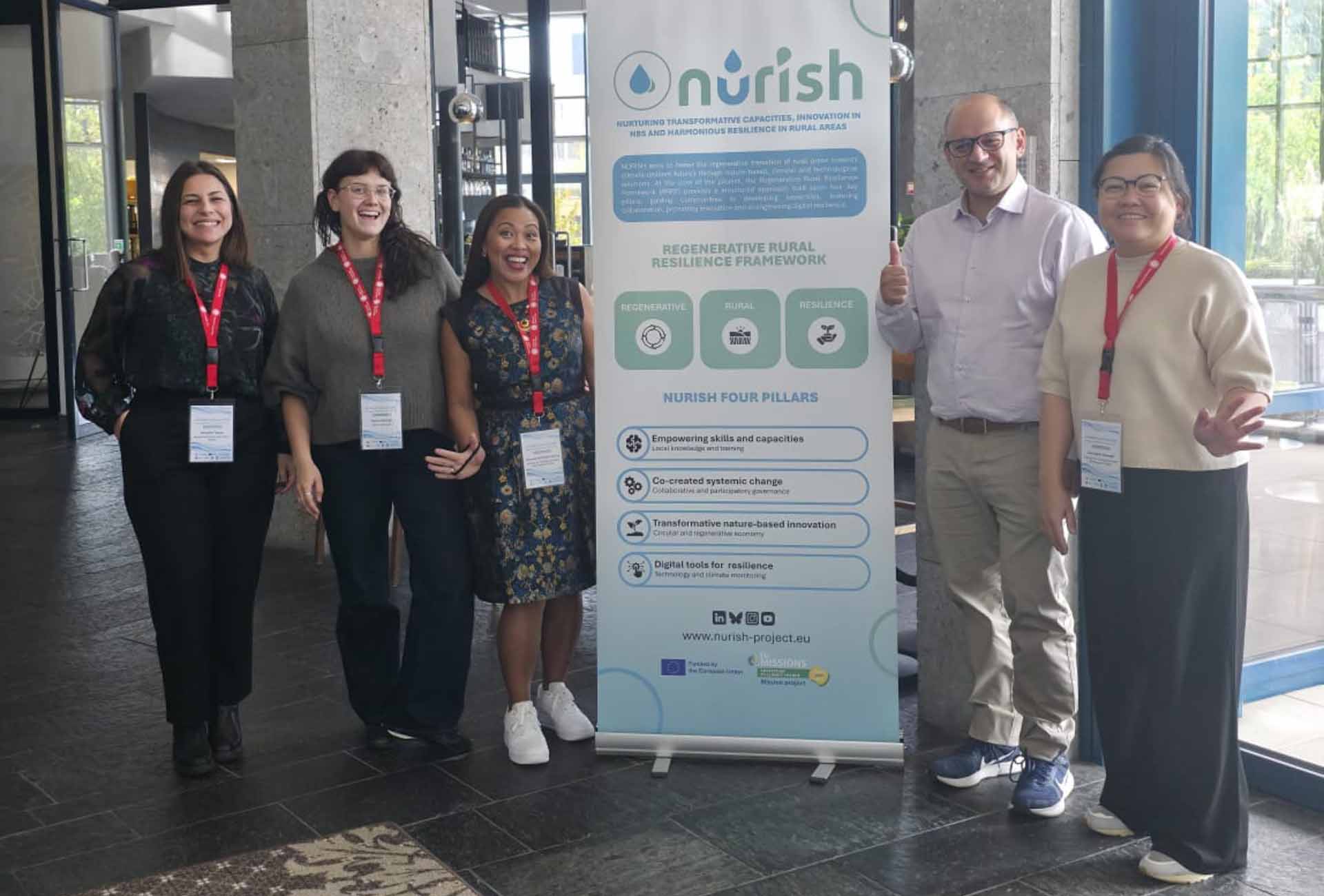
NURISH was strongly represented in the conference in Utrecht, through the presence of partners from Utrecht University (Niki Frantzeskaki, Tynne Huhtaniska, Katharina Holscher), NTUA (Simos Malamis, Alexandra Tsatsou), and IHS (Elena Marie Ensenado, Charmae Wissink – Nercua).
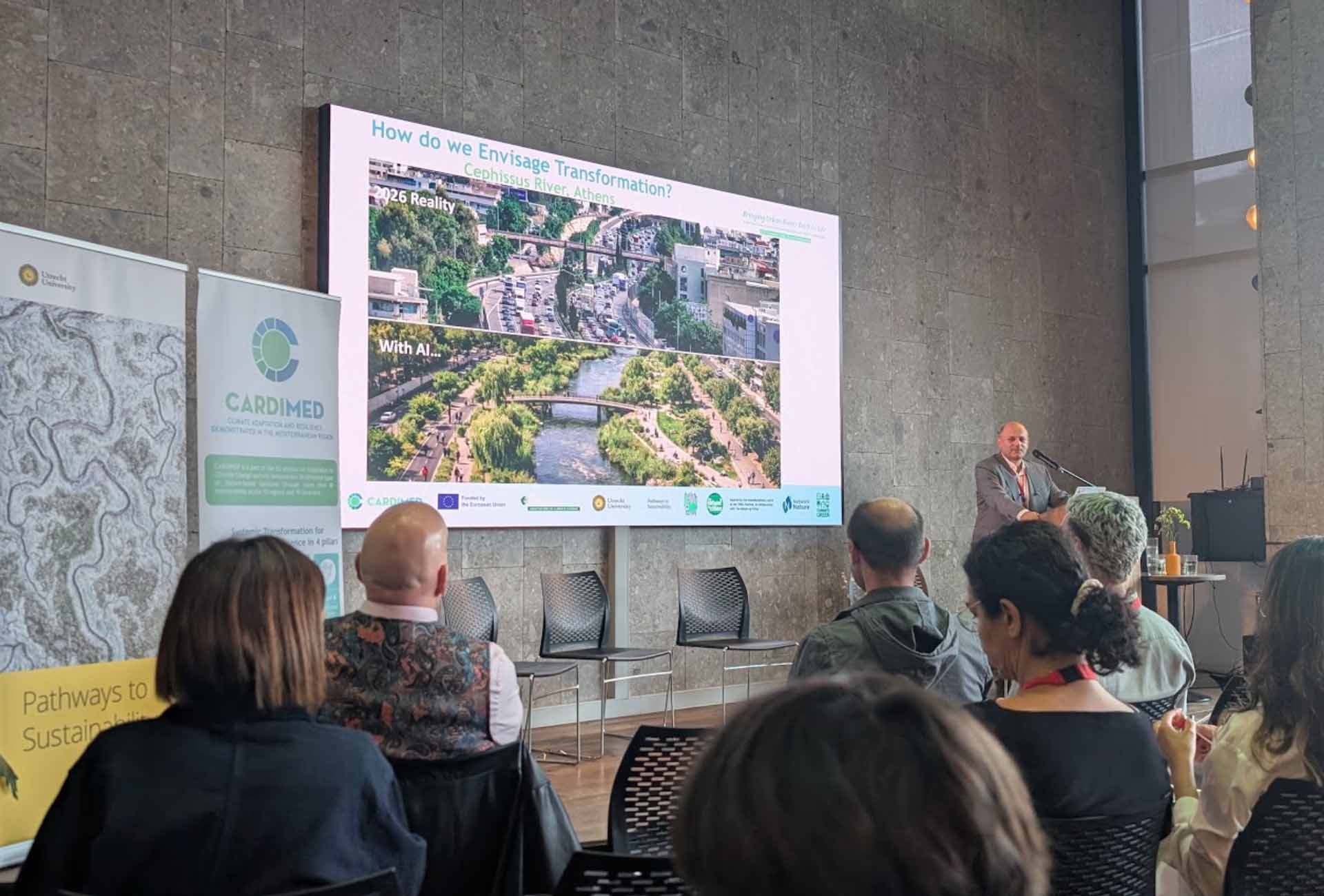
Prof. Simos Malamis (NTUA), coordinator of NURISH and CARDIMED, delivered the keynote of Plenary Session II, «Transforming urban rivers with nature-based solutions», where he introduced NURISH. He was joined on the panel by Kostas Petrakos (MEDINA), Luciana Travassos (UFABC), and Agata Alcara and Abraham Ortega (Biomimicry Granada), with facilitation by Claudia Misteli and David Maddox (The Nature of Cities).
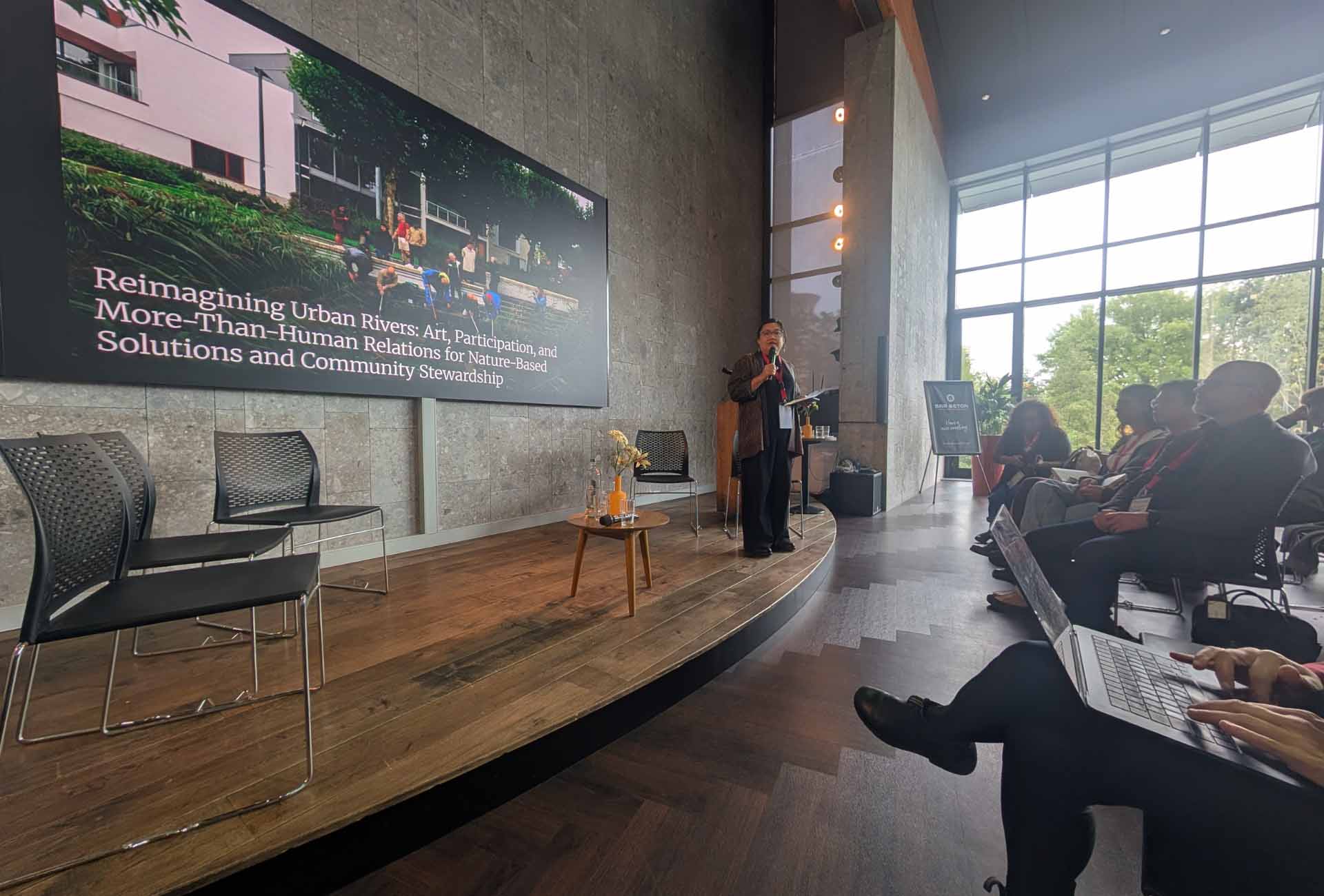
On the same day, NURISH partner IHS led the session «Reimagining Urban Rivers: Art, Participation, and More-Than-Human Relations». Elena Marie Enseñado and Charmae Nercua showed how art and participation can foster community stewardship of NbS, approaches that can inspire citizen participation in NURISH’s rural communities.
The NTUA team also joined sessions on the trade-offs of transforming waterways with NbS, on listening to rivers to regenerate cities, and on rivers as living entities, as well as a field trip to Catharijnesingel, Utrecht’s restored city canal.
Alongside its engaging sessions and activities, the conference brought two forward-looking publications into focus. The first, «Desired Waterscapes: Exploring the human connection in shaping resilient waterscapes» (soon freely available online), was published within CARDIMED and edited by Prof. Niki Frantzeskaki and Alexandra Tsatsou. The book weaves emotion, creativity, and lived experience into stories exploring urban waterscapes and resilience. The second is the forthcoming Manifesto on Bringing Urban Rivers Back to Life, to which NURISH partners will contribute their insights.
Key takeaways for NURISH
Three ideas from the conference are directly related to NURISH and will feed into the project’s activities: The more-than-human dimension (which has already been considered during the stakeholder mapping process), the notion of following the water through senses, history, and culture, and recognising rivers and natural elements as living entities by giving nature back its own rights. All these aspects open new ways for communities to care for their territories, and are especially relevant for rural communities, where the lives of people are truly embedded in nature.