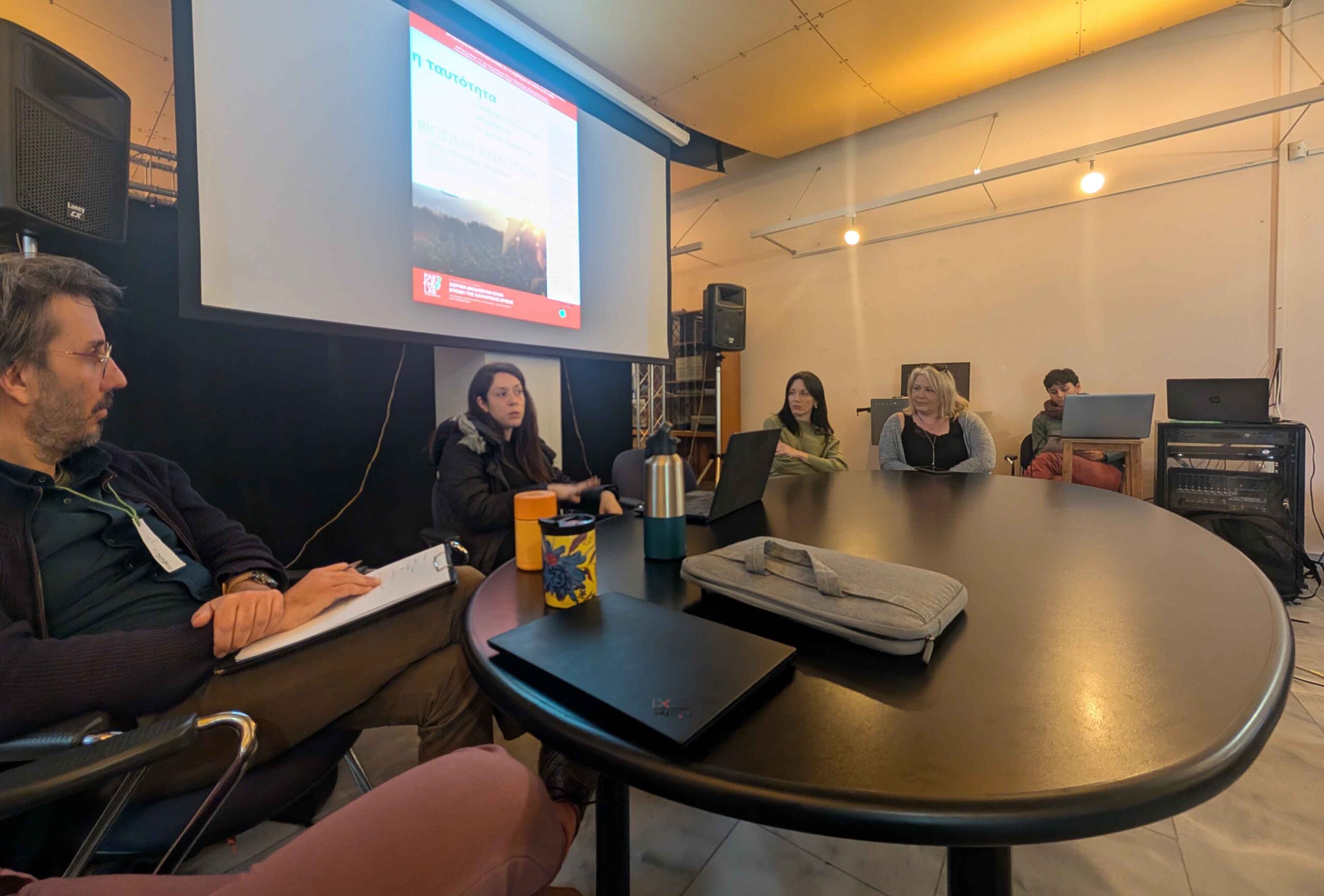
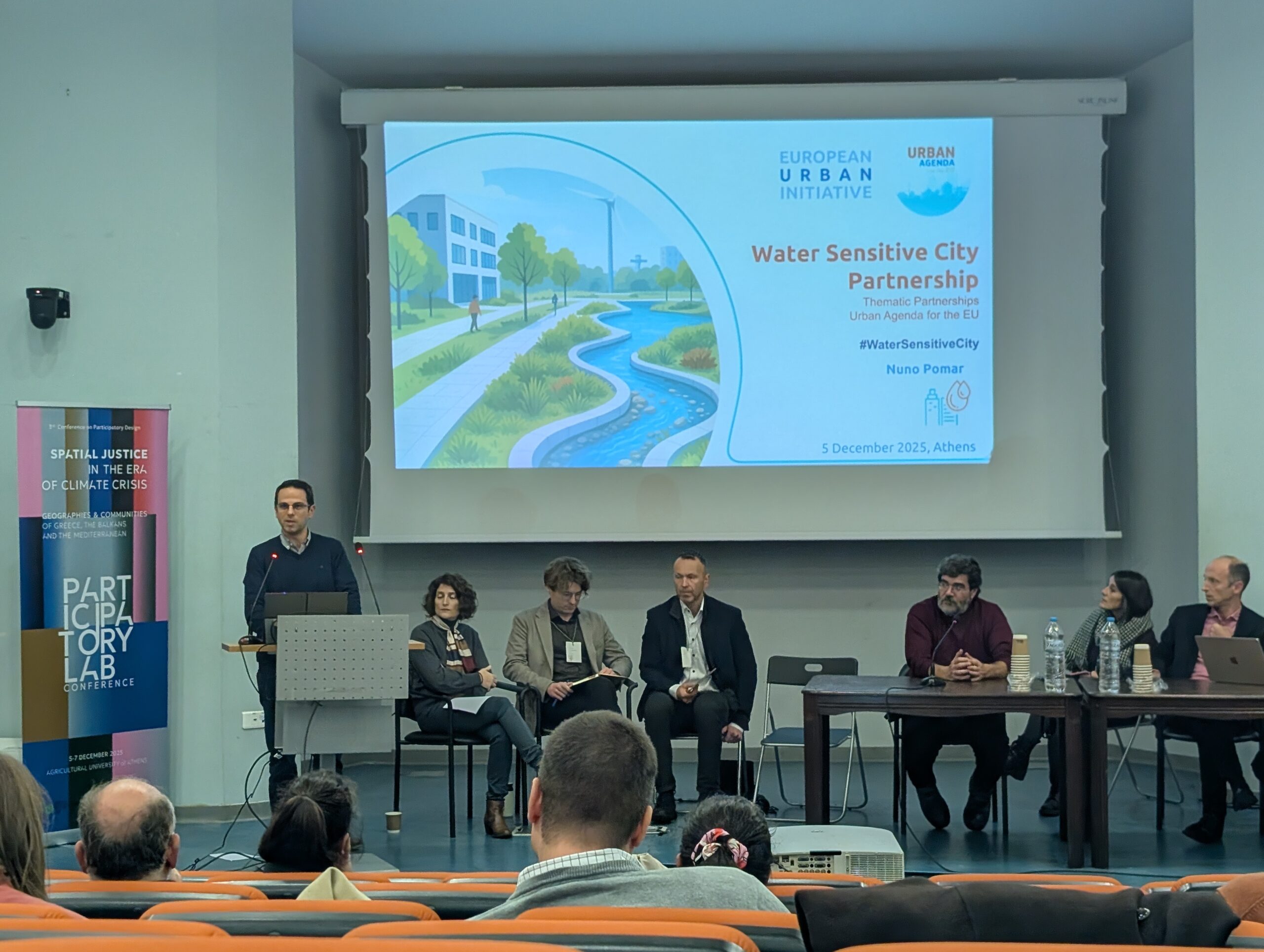
The NURISH project was presented at the 3rd Conference on Participatory Design: Spatial Justice in the Era of Climate Crisis, held from 5–7 December 2025 at the Agricultural University of Athens. The event brought together researchers, practitioners, and communities from Greece, the Balkans, and the Mediterranean to explore participatory approaches to climate resilience and spatial justice.
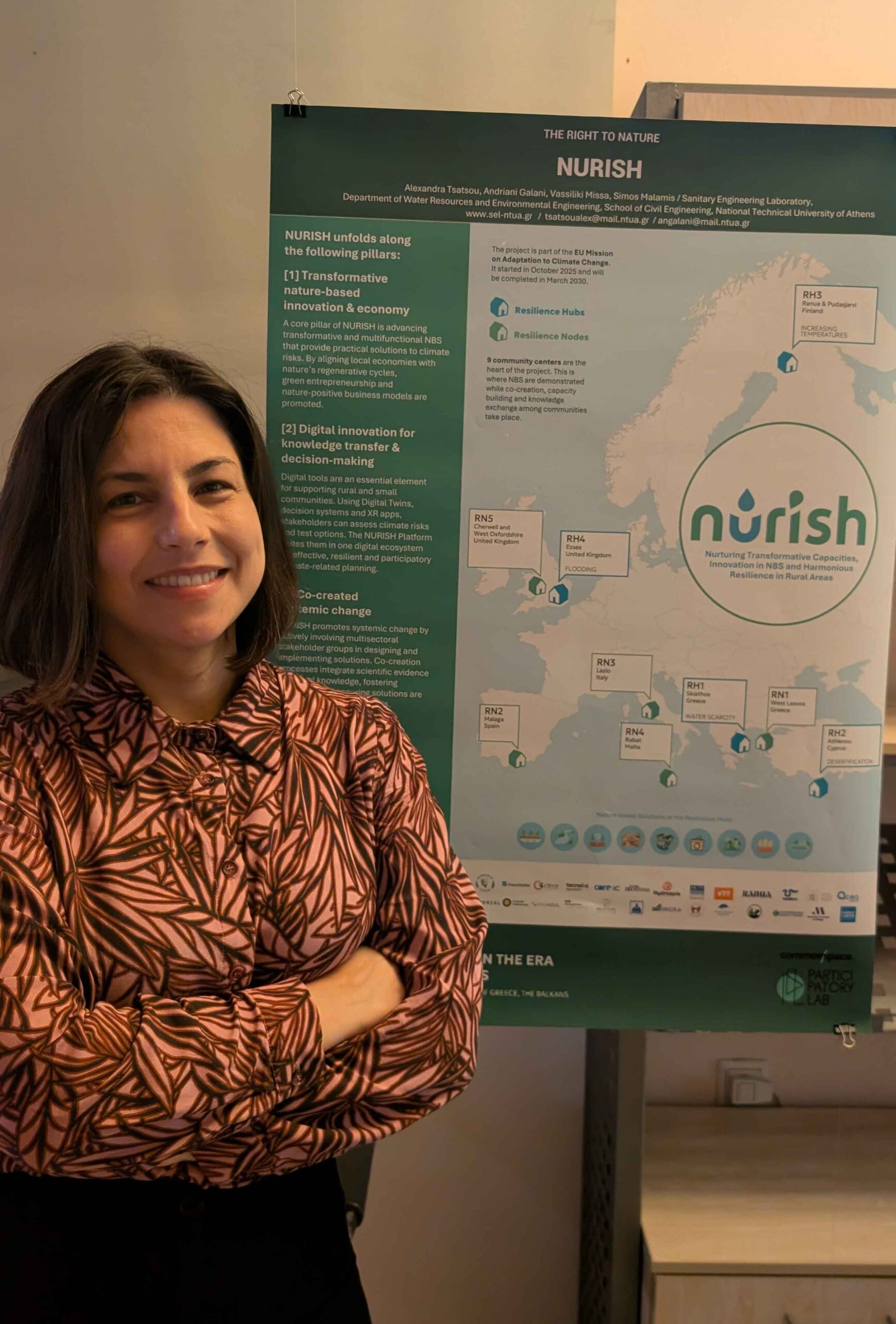
Representing the project coordinator, the National Technical University of Athens (NTUA) – Sanitary Engineering Laboratory, Alexandra Tsatsou contributed to the conference by presenting a poster showcasing the NURISH project’s vision and methodology.
The presentation was part of the session “Sustainability and local identity: Participatory models and experiences”, moderated by Artemis Koumparelou. The session featured a diverse range of contributions addressing the links between climate action, cultural heritage, and community-driven development. Topics included climate action for cultural heritage, the role of regional identity in sustainable development, participatory approaches to designing local food systems, and new methods for assessing growth and carrying capacity in the context of environmental limits. The session also included a creative contribution highlighting local craftsmanship and cultural landscapes through a short film.
Within this rich exchange of ideas, NURISH contributed insights on “Nurturing transformative capacities, innovation in nature-based solutions (NBS) and harmonious resilience in rural areas.” The poster highlighted the project’s four core pillars and its integrated approach to strengthening resilience in rural and small communities.
A key focus of the presentation was the role of nine Community Centres, which serve as local hubs for co-creation, capacity building, and stakeholder engagement. These centres enable communities to actively participate in the design and implementation of nature-based solutions, fostering knowledge exchange and empowering local actors to address climate challenges in a place-based and inclusive way.
By participating in this session, NURISH engaged with complementary initiatives and perspectives, reinforcing the importance of participatory design in addressing climate challenges while preserving local identity and promoting sustainable territorial development.