
Women play a fundamental role in agriculture and rural communities around the world. They contribute to food production, natural resource management, farm management, and the economic and social activities that support the development of rural areas. However, much of this work remains underrecognised, and women do not always have the same opportunities as men.
Every year on 15 October, the International Day of Rural Women, established by the United Nations, recognises women’s contributions to agricultural development, food security and poverty eradication. The occasion also provides an opportunity to reflect on the inequalities that persist in rural areas and the challenges faced by women who live and work there.
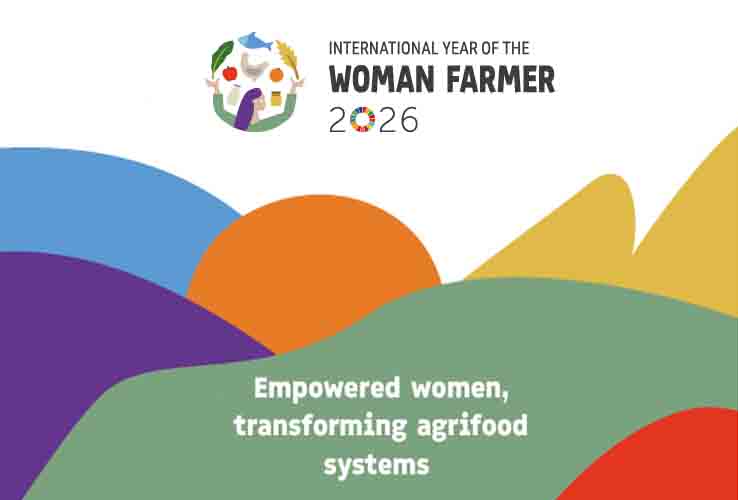
In 2026, this discussion takes on particular significance, as the United Nations has declared the year the International Year of the Woman Farmer. This initiative aims to raise awareness of women’s contributions to agrifood systems and promote greater equality of opportunity.
An essential contribution that still faces inequalities
Women are involved in many stages of agrifood systems, from food production and processing to marketing and distribution. They also play important roles in household management, community networks, and the preservation of traditional agricultural knowledge and practices.
Despite these contributions, inequalities between women and men persist in many regions, particularly in access to land, finance, technology, training and decision-making opportunities.
These inequalities affect not only women’s individual opportunities but also the development of rural communities, which need to draw on the knowledge, skills and experiences of their entire population to address economic, social and environmental challenges.
Climate change: an additional challenge for women farmers
Climate change is transforming the conditions under which agriculture operates. Prolonged droughts, extreme temperatures, heavy rainfall and growing uncertainty about water availability are affecting food production and the livelihoods of many rural communities.
Although these impacts affect the agricultural population as a whole, their consequences can be particularly challenging for women who already face barriers to accessing resources and opportunities.
For example, limited access to finance, training or agricultural technologies can make it more difficult to adopt new practices to cope with water scarcity, improve soil management or reduce the risks associated with extreme weather events.
At the same time, women farmers possess valuable experience and knowledge of crops, local landscapes and natural resource management, which can contribute to developing responses tailored to local needs.
Their participation in decisions concerning agriculture, environmental management and climate change adaptation is therefore essential.
Listening to the voices of rural women
Discussing the future of rural communities also means considering who participates in decisions affecting these territories and whose experiences are taken into account.
Climate change adaptation strategies need to incorporate the perspectives of those who live and work in rural areas. This includes recognising the diversity of rural women’s circumstances, as their needs and opportunities can vary considerably depending on the territory, economic activity and social conditions.
In this context, European initiatives such as NURISH, which encourage rural communities to participate in identifying climate-related challenges and exploring possible responses, form part of a broader effort to develop adaptation processes grounded in local knowledge and needs.
The International Day of Rural Women and the International Year of the Woman Farmer 2026 provide an opportunity to pay greater attention to these women’s experiences, recognise their contributions and reflect on the barriers that continue to limit their participation.
The future of rural communities depends not only on how they respond to environmental challenges, but also on ensuring that everyone within them has the opportunity to contribute to the decisions that will shape that future.